
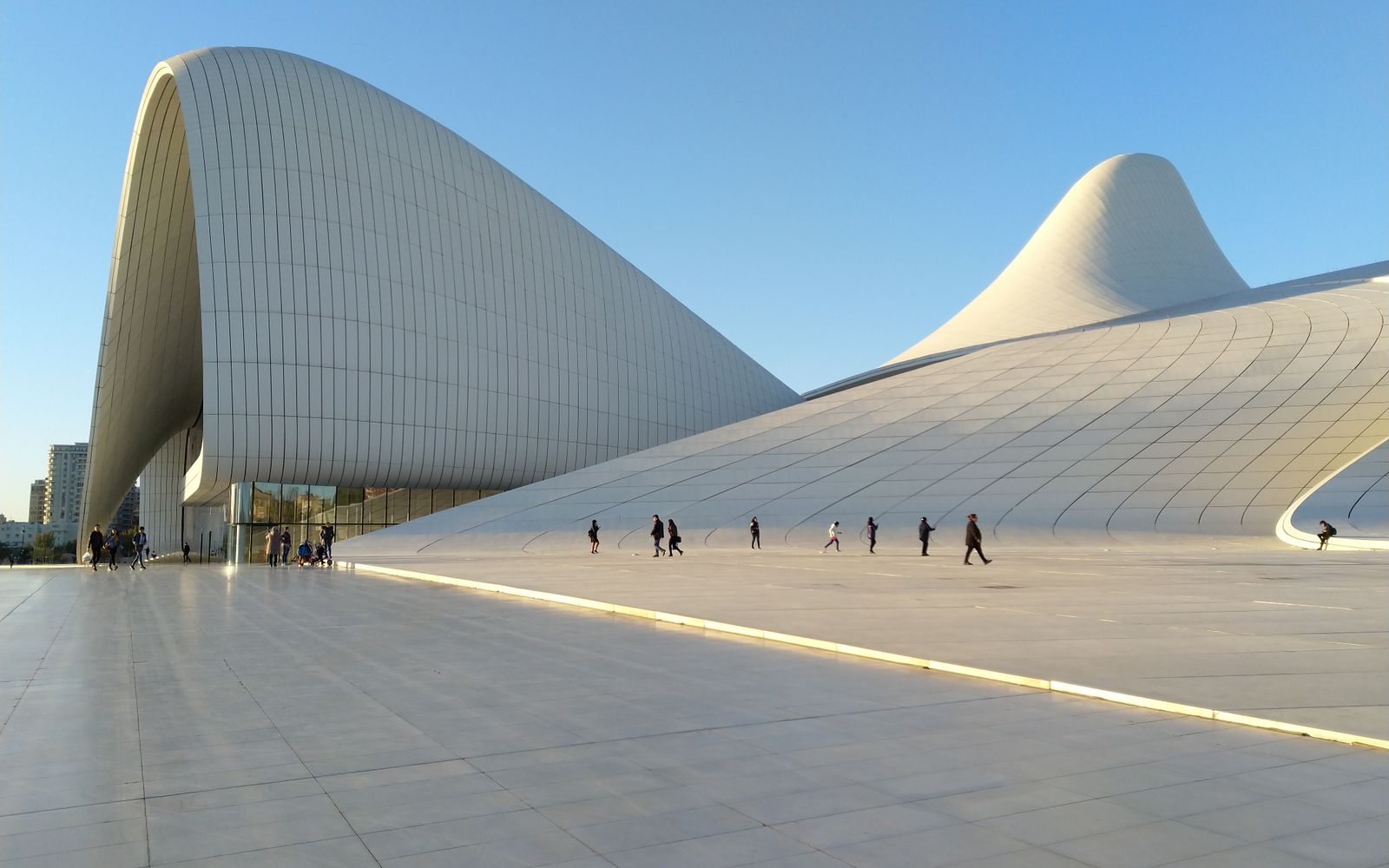
Walk from a roaring arterial road into a tree-lined courtyard and something shifts before you can name it: shoulders drop, breathing slows, the air smells different. Architects long described such moments through intuition. Researchers now try to measure them, fitting walkers with sensors, scanning brains and mapping the sounds and smells of streets. Their shared claim is simple: cities reach our emotions through our senses, and those senses can be designed for.
The field is called neuroarchitecture and, at city scale, neuro-urbanism. Its best-known home, the Academy of Neuroscience for Architecture (ANFA), took shape in 2002 as a legacy project of the American Institute of Architects and was formally launched at the AIA’s June 2003 convention in San Diego [1]. UFI has explored how the field is identifying human emotion through neuroarchitecture and neuro-urbanism. This article takes the senses one at a time, asking what the evidence supports, as part of a wider effort to map urban environment indicators against mental well-being [2].
Neuroscapes: measuring how places feel
Researchers increasingly talk of “neuroscapes”: the traces a place leaves in brain and body. In Edinburgh, twelve students wore a low-cost mobile EEG headset on a 25-minute walk through a shopping street, a green space and a busy commercial district. On entering the green space, readings for frustration, engagement and arousal fell while “meditation” rose [3], echoing UFI’s coverage of green space and brain health.
Other methods trade realism for control. In functional MRI studies, volunteers in a scanner judge images of rooms [4]; physiologists track skin conductance and heart rate variability as markers of stress and recovery [5]. A scoping review lists the wider toolkit, including EEG, fMRI, electrodermal activity, heart rate variability, pupillometry, eye-tracking and virtual reality [6].
Soundscape: beyond noise control
Noise policy traditionally asks how loud a place is. Soundscape research asks how sound is experienced: the international standard ISO 12913-1:2014 defines a soundscape as the “acoustic environment as perceived or experienced and/or understood by a person or people, in context” [7]. Noise control treats sound as waste to be reduced; soundscape design treats it as a resource, keeping wanted sounds such as water, birdsong and voices while masking unwanted ones. UFI’s article on urban noise, stress and mitigation covers the first task; the second is newer.
In a Swedish experiment, 40 people completed a stressful arithmetic task, then heard a fountain with birdsong, road traffic or quiet ambient sound. Skin conductance tended to recover faster with the nature sounds, though heart rate variability showed no effect [5]. A synthesis published in PNAS linked natural sounds to better mood and lower stress and annoyance [8].
Policy is catching up. The European Union’s 2002 Environmental Noise Directive requires action plans that reduce harmful noise and also preserve “environmental noise quality where it is good”, protecting “quiet areas” in towns and open country [9]. In Barcelona, a health impact assessment estimated that 503 traffic-calmed “superblocks” could prevent 667 premature deaths a year, 163 of them through reduced road traffic noise [10]. Japan took a cultural route: in 1996 its Environment Agency certified the “100 Soundscapes of Japan”, chosen after a nationwide public call, to celebrate sounds communities treasure as local symbols [11].
Smellscape: the overlooked sense
Smell may be the most neglected sense in design. The designer and researcher Kate McLean makes it visible through “smellwalks”, in which residents record what they smell, where, how strongly, how pleasant it is and what it evokes. In Amsterdam, 44 residents walking over four days in April 2013 logged 650 smell perceptions, which McLean mapped as scent zones drifting with the prevailing winds [12]. Writing about English towns and cities, the urban designer Victoria Henshaw argued that smellscapes are closely tied to place perception and sense of place, documented how cities manage odours, and offered designers tools for working with smell [13].
The task runs both ways. Odours from traffic, waste and industry need control, but pleasant smells can be planned: fragrant planting along walking routes, room for bakeries and food stalls on active streets, and soils and planting that release petrichor, the earthy scent of rain.
Light and colour: what the evidence supports
Light has the firmest physiological evidence. In 2022 an international expert group recommended at least 250 lux of “melanopic equivalent daylight illuminance” at eye level by day, ideally from daylight; no more than 10 lux in the three hours before bedtime; and no more than 1 lux where people sleep [14]. These are concrete targets for windows, room depth and lighting controls, themes UFI has explored in natural illumination in classroom design.
Darkness matters too. In a study of 86,772 adults with objectively measured light exposure, more light at night was associated with higher risk of depression, anxiety, psychosis, bipolar disorder and self-harm, while more daytime light was associated with lower risk of several of these [15]. For cities this means shielded street lighting, restrained illuminated advertising and bright daytime spaces, and it ties light directly to sleep quality as an urban health indicator.
Colour is where claims most often outrun evidence. The popular rule that reds excite and blues calm is old, but psychologist Andrew Elliot describes colour research as “at a nascent stage of development”, warns that underpowered samples commonly overestimate effects, and stresses that effects depend on culture, age, task and context [16]. A survey of 4,598 people in 30 nations found broadly shared colour–emotion associations (each nation’s pattern matched the global one at an average r = .88), yet nationality could still be predicted from people’s answers, and nations closer in language or geography were more alike [17].
Curves, ceilings and street edges
Form carries emotional weight too. In a 2013 fMRI study, people more often judged curvilinear rooms beautiful than rectilinear ones, judgements that activated the anterior cingulate cortex; contour did not change decisions to enter or leave [4]. A follow-up found that rooms with higher ceilings, and open rooms, were more likely to be judged beautiful, while enclosed rooms more often prompted exit decisions and activated the anterior midcingulate cortex, which receives direct projections from the amygdala [18].
On the street, cognitive neuroscientist Colin Ellard led small groups past a long, blank Whole Foods frontage on East Houston Street in New York, then to a lively strip nearby. At the blank facade people reported low mood and arousal, calling it “bland” and “monotonous”; on the lively street they felt “lively and engaged”, and skin conductance bracelets showed a similar pattern [19]. It was a small field exercise, but it adds bodily evidence to the case for active ground floors.
Designing for those who feel the city most
Sensory design matters most for people easily overwhelmed by stimulation. In Cairo, architect Magda Mostafa developed the ASPECTSS design index for autism, built on seven principles (acoustics, spatial sequencing, escape, compartmentalisation, transition spaces, sensory zoning and safety), and applied it to a special-needs centre in Qattameya [20]. Escape spaces and sensory zoning translate readily to libraries, stations and civic buildings.
Healthcare offers some of the oldest evidence. In Roger Ulrich’s 1984 study of 23 matched pairs of gallbladder surgery patients, those whose windows faced trees had shorter postoperative stays (7.96 versus 8.70 days), fewer negative nurses’ notes and fewer doses of moderate and strong painkillers than those facing a brick wall [21]. UFI’s article on landscape integration in behavioural healthcare centres shows how such findings shape therapeutic settings.
Reading the evidence with care
Neuroarchitecture attracts hype, and “brain-friendly” labels often rest on thin evidence. The scoping review cited above found that of 612 relevant references, only 141 explicitly applied neuroscience to architecture. It warned that the “laboratory context can alter results”, that “a simulation will always be a simulation”, and that most studies have focused on vision [6]. Samples are often small, as with the twelve Edinburgh walkers [3], and culture shapes responses [17]. Neuroscience can test and sharpen design intuitions; it cannot replace post-occupancy evaluation, local knowledge or public participation.
Principles for architects and urban designers
1. Design the soundscape, not just the decibels. Pair noise reduction with wanted sounds, and map and protect quiet areas [7, 9].
2. Plan for smell. Separate odour sources from places where people linger, and create pleasant smell landmarks [13].
3. Prioritise daylight and protect the dark. Aim for bright days, dim evenings and shielded outdoor lighting near homes [14, 15].
4. Use height, openness and curvature deliberately. Reserve tight enclosure for spaces meant for retreat [4, 18].
5. Keep street edges active. Replace long blank frontages with fine-grained, permeable ground floors [19].
6. Offer refuge. Quiet rooms, escape spaces and gentle transitions help people prone to sensory overload [20].
7. Treat colour as local. Test palettes with the communities who will live with them [16, 17].
8. Measure and listen. Combine sensor data with people’s own judgements. Indicator frameworks [2] and stakeholder research, such as Sarkar and Pujara’s investigation of how 201 respondents perceived 49 physical and 12 social urban environment indicators associated with mental well-being [22], show how the sensory city can be assessed with the people who use it.
Every street already has a sound, a smell, a light and a shape. The question is whether we design them on purpose.
References
1. Academy of Neuroscience for Architecture. (n.d.). History. https://anfarch.org/about/history
2. Sarkar, A., & Pujara, T. (2025). A conceptual framework for mapping urban environment indicators and mental well-being. Discover Cities, 2(1), 119. https://doi.org/10.1007/s44327-025-00166-z
3. Aspinall, P., Mavros, P., Coyne, R., & Roe, J. (2015). The urban brain: Analysing outdoor physical activity with mobile EEG. British Journal of Sports Medicine, 49(4), 272–276. https://doi.org/10.1136/bjsports-2012-091877
4. Vartanian, O., Navarrete, G., Chatterjee, A., Fich, L. B., Leder, H., Modroño, C., Nadal, M., Rostrup, N., & Skov, M. (2013). Impact of contour on aesthetic judgments and approach-avoidance decisions in architecture. Proceedings of the National Academy of Sciences, 110(Suppl. 2), 10446–10453. https://doi.org/10.1073/pnas.1301227110
5. Alvarsson, J. J., Wiens, S., & Nilsson, M. E. (2010). Stress recovery during exposure to nature sound and environmental noise. International Journal of Environmental Research and Public Health, 7(3), 1036–1046. https://doi.org/10.3390/ijerph7031036
6. Higuera-Trujillo, J. L., Llinares, C., & Macagno, E. (2021). The cognitive-emotional design and study of architectural space: A scoping review of neuroarchitecture and its precursor approaches. Sensors, 21(6), 2193. https://doi.org/10.3390/s21062193
7. International Organization for Standardization. (2014). ISO 12913-1:2014 Acoustics — Soundscape — Part 1: Definition and conceptual framework. https://www.iso.org/standard/52161.html
8. Buxton, R. T., Pearson, A. L., Allou, C., Fristrup, K., & Wittemyer, G. (2021). A synthesis of health benefits of natural sounds and their distribution in national parks. Proceedings of the National Academy of Sciences, 118(14), e2013097118. https://doi.org/10.1073/pnas.2013097118
9. European Parliament & Council of the European Union. (2002). Directive 2002/49/EC of 25 June 2002 relating to the assessment and management of environmental noise. https://eur-lex.europa.eu/eli/dir/2002/49/oj/eng
10. Mueller, N., Rojas-Rueda, D., Khreis, H., Cirach, M., Andrés, D., Ballester, J., Bartoll, X., Daher, C., Deluca, A., Echave, C., Milà, C., Márquez, S., Palou, J., Pérez, K., Tonne, C., Stevenson, M., Rueda, S., & Nieuwenhuijsen, M. (2020). Changing the urban design of cities for health: The superblock model. Environment International, 134, 105132. https://doi.org/10.1016/j.envint.2019.105132
11. Environment Agency of Japan. (2000, August 31). 第4回音風景保全全国大会の開催について [Announcement of the 4th National Soundscape Conservation Conference, including background on the 100 Soundscapes of Japan; in Japanese]. Ministry of the Environment, Japan. https://www.env.go.jp/press/1511.html
12. McLean, K. (2014). Smellmap: Amsterdam – Olfactory art & smell visualisation. In Proceedings of the IEEE VIS 2014 Arts Program (VISAP’14: Art+Interpretation) (pp. 143–145). Paris, France. https://vis.cs.ucdavis.edu/vis2014papers/VIS_Conference/artShow/VISAP/18_McLean_Smellmap_VISAP2014.pdf
13. Henshaw, V. (2014). Urban smellscapes: Understanding and designing city smell environments. Routledge. https://www.routledge.com/products/9780203072776
14. Brown, T. M., Brainard, G. C., Cajochen, C., Czeisler, C. A., Hanifin, J. P., Lockley, S. W., Lucas, R. J., Münch, M., O’Hagan, J. B., Peirson, S. N., Price, L. L. A., Roenneberg, T., Schlangen, L. J. M., Skene, D. J., Spitschan, M., Vetter, C., Zee, P. C., & Wright, K. P., Jr. (2022). Recommendations for daytime, evening, and nighttime indoor light exposure to best support physiology, sleep, and wakefulness in healthy adults. PLOS Biology, 20(3), e3001571. https://doi.org/10.1371/journal.pbio.3001571
15. Burns, A. C., Windred, D. P., Rutter, M. K., Olivier, P., Vetter, C., Saxena, R., Lane, J. M., Phillips, A. J. K., & Cain, S. W. (2023). Day and night light exposure are associated with psychiatric disorders: An objective light study in >85,000 people. Nature Mental Health, 1(11), 853–862. https://doi.org/10.1038/s44220-023-00135-8
16. Elliot, A. J. (2015). Color and psychological functioning: A review of theoretical and empirical work. Frontiers in Psychology, 6, 368. https://doi.org/10.3389/fpsyg.2015.00368
17. Jonauskaite, D., Abu-Akel, A., Dael, N., Oberfeld, D., Abdel-Khalek, A. M., Al-Rasheed, A. S., Antonietti, J.-P., Bogushevskaya, V., Chamseddine, A., Chkonia, E., Corona, V., Fonseca-Pedrero, E., Griber, Y. A., Grimshaw, G., Hasan, A. A., Havelka, J., Hirnstein, M., Karlsson, B. S. A., Laurent, E., … Mohr, C. (2020). Universal patterns in color-emotion associations are further shaped by linguistic and geographic proximity. Psychological Science, 31(10), 1245–1260. https://doi.org/10.1177/0956797620948810
18. Vartanian, O., Navarrete, G., Chatterjee, A., Fich, L. B., Gonzalez-Mora, J. L., Leder, H., Modroño, C., Nadal, M., Rostrup, N., & Skov, M. (2015). Architectural design and the brain: Effects of ceiling height and perceived enclosure on beauty judgments and approach-avoidance decisions. Journal of Environmental Psychology, 41, 10–18. https://doi.org/10.1016/j.jenvp.2014.11.006
19. Ellard, C. (2015, September 1). Why boring streets make pedestrians stressed and unhappy. Aeon. https://aeon.co/essays/why-boring-streets-make-pedestrians-stressed-and-unhappy
20. Mostafa, M. (2014). Architecture for autism: Autism ASPECTSS™ in school design. Archnet-IJAR, 8(1), 143–158. https://doi.org/10.26687/archnet-ijar.v8i1.314
21. Ulrich, R. S. (1984). View through a window may influence recovery from surgery. Science, 224(4647), 420–421. https://doi.org/10.1126/science.6143402
22. Sarkar, A., & Pujara, T. (2025). Perceptions of urban environment indicators associated with mental well-being: A stakeholder investigation. Cities & Health, 9(2), 273–297. https://doi.org/10.1080/23748834.2025.2480480
Cover image: people walking beside the curving forms of the Heydar Aliyev Center in Baku, Azerbaijan. Photo by Rohit Potdar on Pexels.
Write for UFI
Have a story about cities? We publish articles and photo essays from researchers, practitioners and photographers.
Pitch us at contact@urbanfrontierinsights.com