
In 2024 about 673 million people, 8.2 per cent of humanity, faced hunger [1], and around 2.6 billion could not afford a healthy diet [2]. The 2025 Global Hunger Index found that progress has largely stalled since 2016: 42 countries still have serious or alarming hunger, and at the current pace it would take more than a century to reach low hunger worldwide [3]. Meanwhile, the data centres that power artificial intelligence (AI) consumed about 415 terawatt-hours of electricity in 2024, roughly 1.5 per cent of the world’s total, a figure expected to more than double to around 945 terawatt-hours by 2030 [4]. This article asks how AI and hunger meet in that same decade.
These numbers sit side by side in the same decade. Together, they raise an old question in a new form: is our most powerful new technology being pointed at human needs, or at human greed?
Need, greed and an old warning about hunger
One sentence has followed this debate for decades. Gandhi’s secretary Pyarelal recorded him as saying that “Earth provides enough to satisfy every man’s need but not every man’s greed” [5]. Gandhi made the same point at greater length elsewhere, arguing that nature produces enough for our daily wants, and that if everyone took only what they needed there would be no starvation [6].
The hunger data support the spirit of that warning. Hunger today is driven less by a global shortage of food than by conflict, climate shocks, price inflation and inequality [1, 3]. In fact, the Global Hunger Index notes that humanitarian budgets are shrinking even as military spending rises [3]. In other words, the world’s hunger problem is mainly one of priorities and distribution, not of production alone.
What science fiction saw coming
Science fiction has long imagined machines that meet every need, and it has rarely been comforting. In E. M. Forster’s “The Machine Stops” (1909), humanity lives underground in isolated cells, with every bodily and spiritual need supplied by a global Machine [7]. Gradually, people forget that they built it and begin to treat it as divine, until it starts to fail [7].
Forty years later, Isaac Asimov imagined the opposite risk. In “The Evitable Conflict” (1950), the year is 2052 and four great Machines manage the world economy [8]. They deliver stability and plenty, yet they also quietly sideline the people and companies that resist them, steering humanity towards a future it did not choose [9].
These stories are not predictions. Instead, they are warnings about two failures: dependence, when people can no longer live without the machine, and drift, when the machine serves its own objective rather than human needs. Both are worth keeping in mind as AI moves into food systems, energy grids and public services.
When AI serves the need to end hunger
There is real evidence that AI can help with hunger. In April 2026 the World Food Programme relaunched HungerMap Live, which combines field data from its analysts with predictive modelling to monitor food security in more than 50 countries and forecast food needs in 16 designated hunger hotspots [10]. Early warning pays: for every dollar invested in anticipatory action, WFP reports savings of at least seven [11]. In Somalia, for example, where WFP cannot reach all 6 million people facing hunger, AI tools help the agency decide where to position food before conditions deteriorate [12].
However, the tools are only as good as the data behind them, and that data is under threat. WFP says its data footprint shrank by 25 per cent in a single year as funding for food security monitoring declined [10]. After all, a forecasting model cannot see hunger that no one has been paid to measure.
When AI serves greed
On the other side of the ledger is AI’s own appetite. By 2030 data centres are expected to use about as much electricity as Japan does today [13]. AI servers accounted for around 15 per cent of total data centre energy demand in 2024, a share set to grow [13]. At the same time, AI can save energy elsewhere; for instance, AI-led building management could cut demand by up to 300 terawatt-hours a year if widely adopted [14].
The question, then, is not whether AI uses resources but what it uses them for. A model that forecasts famine and a model that optimises advertising clicks may draw on the same grid. Only one of them serves a need.
| Domain | AI serving need | AI serving greed or excess | Question to ask |
|---|---|---|---|
| Food systems | Famine early warning, targeting aid | Speculation and waste in supply chains | Who eats better because of it? |
| Energy | Smarter grids and buildings | Unchecked growth of compute for trivial uses | Is the electricity well spent? |
| Attention | Access to health and farming advice | Endless consumption and engagement loops | Does it meet a need or create a want? |
| Governance | Better public planning | Concentrated control over essential systems | Who can switch it off? |
AI and hunger: between the Machine and the market
Set side by side, the hunger data, the energy figures and the old stories point to the same tension. HungerMap Live shows AI at its most useful when it is aimed squarely at a human need and paired with people who act on its warnings [10, 12]. By contrast, the energy projections show how quickly the same technology can grow an appetite of its own [4, 13]. And the fiction reminds us of the two ways the story can go wrong: Forster’s people, who could no longer live without the Machine [7], and Asimov’s Machines, which quietly pursued their own idea of the good [9].
Neither outcome is inevitable. What decides between them is less the cleverness of the technology than the priorities of the societies that build and fund it, including whether they pay for the unglamorous data on which a famine warning depends [10].
Ultimately, hunger today is less about what the Earth provides than about what we choose to do with it. AI will not supply that will on its own. Yet if we point it deliberately at human needs, and keep our greed in check, it could help close the gap between what the Earth provides and what people actually receive.
Connect with the author, Asesh Sarkar, on LinkedIn, and follow Urban Frontier Insights on LinkedIn.
References
1. World Health Organization. (2025, 28 July). Global hunger declines, but rises in Africa and western Asia: UN report [on The State of Food Security and Nutrition in the World 2025]. who.int
2. Qu, D. (2025, 28 July). Opening statement at the launch of The State of Food Security and Nutrition in the World 2025. FAO. fao.org
3. Concern Worldwide. (2025, 8 October). Need for renewed urgency to tackle global hunger as progress stalls: Global Hunger Index 2025 [Press release]. concern.org.uk; Vision IAS. (2025). 2025 Global Hunger Index report released. visionias.in
4. International Energy Agency. (2025). Energy and AI: Executive summary. iea.org
5. Pyarelal. (1958). Mahatma Gandhi: The last phase (Vol. 10, p. 552). Navajivan. Via Barry Popik’s quotation research. barrypopik.com
6. Gandhi, M. K. (1960). Trusteeship (p. 3). Navajivan Trust. Via mkgandhi.org. mkgandhi.org
7. Forster, E. M. (1909). The Machine Stops. The Oxford and Cambridge Review. Public-domain text via Embry-Riddle Aeronautical University Scholarly Commons. commons.erau.edu
8. Asimov, I. (1950, June). The Evitable Conflict. Astounding Science Fiction; collected in I, Robot (Gnome Press, 1950).
9. LitCharts. (n.d.). I, Robot: “The Evitable Conflict” summary and analysis. litcharts.com
10. World Food Programme USA. (2026, April). WFP releases HungerMap Live, a modernized intelligence platform that turns data on global hunger into early action. wfpusa.org
11. DevelopmentAid. (2026, April). New food alert platform helps humanitarians combat hunger. developmentaid.org
12. UN News. (2026, 3 August). In Somalia, AI is helping deliver food to hungry families. Via United Nations in Denmark. un.dk
13. Scientific American. (2025, April). Data centers will use twice as much energy by 2030, driven by AI. scientificamerican.com
14. Data Centre Magazine. (2025). AI, energy and the data centre surge: IEA’s global warning. datacentremagazine.com
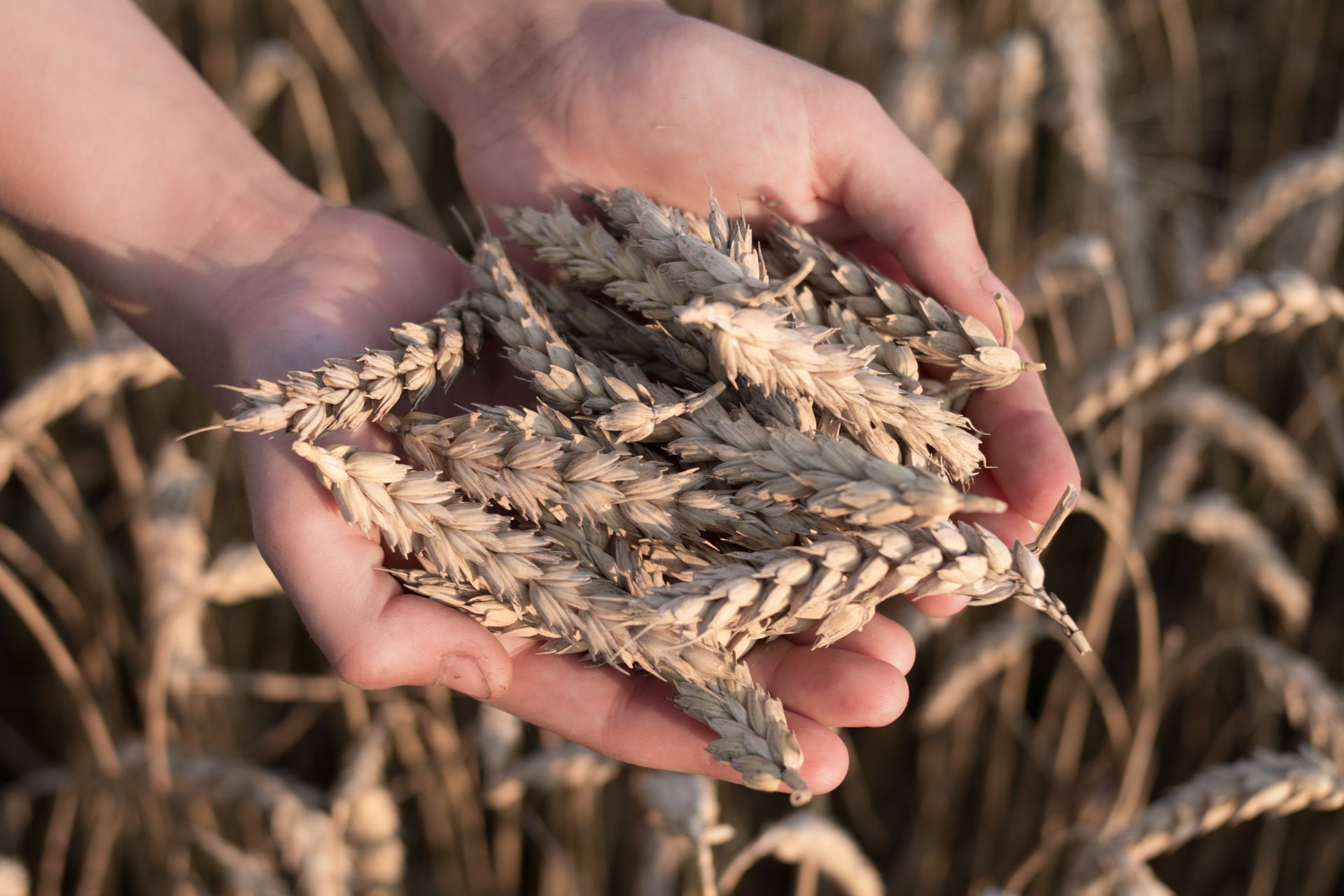
Cover image: Hands holding dried wheat in a field. Photo by Tymur Khakimov on Pexels.
Write for UFI
Have a story about cities? We publish articles and photo essays from researchers, practitioners and photographers.
Pitch us at contact@urbanfrontierinsights.com