
By the mid-2030s the world will have about 265 million people aged 80 or older, more than the number of infants under one, and by the late 2070s people aged 65 and over, around 2.2 billion of them, will outnumber children under 18 [1]. Japan shows where an ageing population leads. Its 2025 census found that 29.4 per cent of the population is 65 or older, a record [2], and the share is projected to reach 34.8 per cent by 2040 [3].
However, the people who look after older adults are ageing too. In September 2026 the World Health Organization warned that a quarter of doctors are set to retire within a decade, deepening a projected shortfall of 11.1 million health workers by 2030, and that 67 countries may lack the staff to maintain today’s standard of care [4]. Into that gap steps a new promise: physical AI, meaning robots and sensor systems that can perceive, move and act in the real world. This article asks what physical AI can realistically do for an ageing population, what it cannot, and how it should be governed.
What physical AI promises an ageing population
Until recently, AI in healthcare mostly meant software: reading scans, flagging risks, drafting notes. Physical AI adds a body. Advances in generative AI and large models have accelerated what researchers call embodied intelligence, letting a new generation of humanoid and service robots perceive, learn and act more autonomously [5]. As a result, investors expect household robots to become a large market in the coming decades [5].
Caution is warranted, however. Hospitals and care homes are adopting robots first for simple support tasks such as delivering meals, linen and supplies, and experts quoted in 2025 estimated that humanoid robots able to provide safe, reliable and affordable physical care at home are still ten to fifteen years away [6]. In other words, the near future is one of robots that support carers, not robots that replace them.
Lessons from Japan’s care robots
Japan has invested heavily in care robots, and the results are sobering. The anthropologist James Wright spent 2016 to 2020 studying both a national robot research laboratory and a nursing home that trialled three different care robots [7]. He found that the robots, meant to save staff time, often added work instead, because they needed care themselves and disrupted the parts of the job staff valued most [8]. Moreover, a 2019 survey of more than 9,000 care facilities found that only about one in ten had introduced care robots of any kind [7].
The lesson is not that robots have no place in care. Rather, technology designed without carers and residents tends to solve the engineer’s problem instead of the care home’s.
Medical emergencies at home
The most urgent case for physical AI may be the emergency that happens when no one is watching. Falls are the second leading cause of unintentional injury deaths worldwide, killing an estimated 684,000 people each year, and adults over 60 suffer the greatest number of fatal falls [9]. In addition, some 37.3 million falls each year are severe enough to need medical attention [9].
Sensors, wearables and home robots can detect a fall, raise an alarm and share vital signs with responders. Yet detection is only the first link in a chain. Someone must answer the alarm, an ambulance must arrive, and a hospital must be ready. Consequently, a home robot that calls for help into an overstretched emergency system saves fewer lives than one that is part of a planned, staffed and accountable response.
Governing medical AI for an ageing population
Regulators are already struggling to keep pace with software, let alone robots. The US Food and Drug Administration had authorised more than 1,400 AI-enabled medical devices by early 2026, including a record 331 in 2025, most of them in radiology [10]. To manage AI that keeps learning, the FDA finalised guidance in December 2024 that lets manufacturers pre-authorise planned algorithm updates [11]. In Europe, meanwhile, the AI Act’s duties for high-risk AI built into regulated products such as medical devices have been postponed to 2 August 2028 [12].
Older people face a particular risk. In 2022 the WHO warned that AI for health can perpetuate ageism, for example when the data used to train systems under-represent older people or reflect past stereotypes [13]. Its policy brief also calls for designing AI with and by older people and investing in their digital literacy and that of their carers [13].
| Layer of care | What physical AI can do | What it cannot do alone | Governance need |
|---|---|---|---|
| Daily support | Fetch, carry, remind, monitor | Offer touch, judgement and companionship | Design with carers and residents |
| Emergencies | Detect falls, raise alarms, share vital signs | Reach the patient, treat, transport | Link devices to staffed response systems |
| Clinical decisions | Flag risks, read scans | Weigh a patient’s values and context | Clear human accountability and audit |
| System planning | Forecast demand | Replace the missing workforce | Invest in people alongside machines |
The care question behind the technology
Read together, these threads suggest that the hardest questions about physical AI in care are not technical. Japan’s experience shows that robots built without carers and residents can add to the workload they were meant to ease [7, 8]. Similarly, the WHO’s warning on ageism shows that systems trained on data that overlook older people may serve them poorly [13]. And the emergency at home shows that a sensor is only as useful as the people and services that answer it.
There is also a quieter tension. Faced with a shortfall of more than 11 million health workers [4], it is tempting to see machines as a substitute for people. Yet the evidence so far points the other way: physical AI is most promising where it extends the reach of human carers, and least convincing where it is asked to replace the touch, judgement and companionship that care depends on.
In the end, an ageing population is a sign of success: more people are living longer. Whether those extra years are healthy and dignified will depend less on how clever our machines become than on how wisely we govern them, and on whether we still value the human hands that care.
Connect with the author, Asesh Sarkar, on LinkedIn, and follow Urban Frontier Insights on LinkedIn.
References
1. United Nations. (2024, 11 July). UN projects world population to peak within this century [Press release on World Population Prospects 2024]. un.org
2. Bernama-Kyodo. (2026, 29 September). Japan elderly population hits fresh high at 29.4 per cent: 2025 census. Bernama. bernama.com
3. Jiji Press. (2026, 20 September). Proportion of elderly population in Japan hits record high near 30 pct. Nippon.com. nippon.com
4. Reuters. (2026, 18 September). WHO flags growing health workforce gap as workers and patients age. The Edge Malaysia. theedgemalaysia.com
5. Bank of America Institute. (2026, March). Physical AI, part 2: Humanoid robots. institute.bankofamerica.com
6. ConsumerAffairs. (2025). Robots will play a growing role in elder care, experts say. consumeraffairs.com
7. Pacific Affairs. (n.d.). Review of Robots won’t save Japan: An ethnography of eldercare automation, by J. Wright (Cornell University Press, 2023). pacificaffairs.ubc.ca
8. Can ‘Robots Won’t Save Japan’ save robotics? (2024). arXiv:2403.14673. arxiv.org
9. World Health Organization. (n.d.). Falls [Fact sheet]. who.int
10. MedTech Dive. (2026). Tracking AI-enabled medical devices authorized by the FDA. medtechdive.com
11. IntuitionLabs. (2026). FDA-approved AI medical devices list: Complete 2026 guide. intuitionlabs.ai
12. Gibson Dunn. (2026). EU AI Act omnibus agreement: Postponed high-risk deadlines and other key changes. gibsondunn.com
13. World Health Organization. (2022, 9 February). Ensuring artificial intelligence (AI) technologies for health benefit older people [on the policy brief Ageism in artificial intelligence for health]. who.int
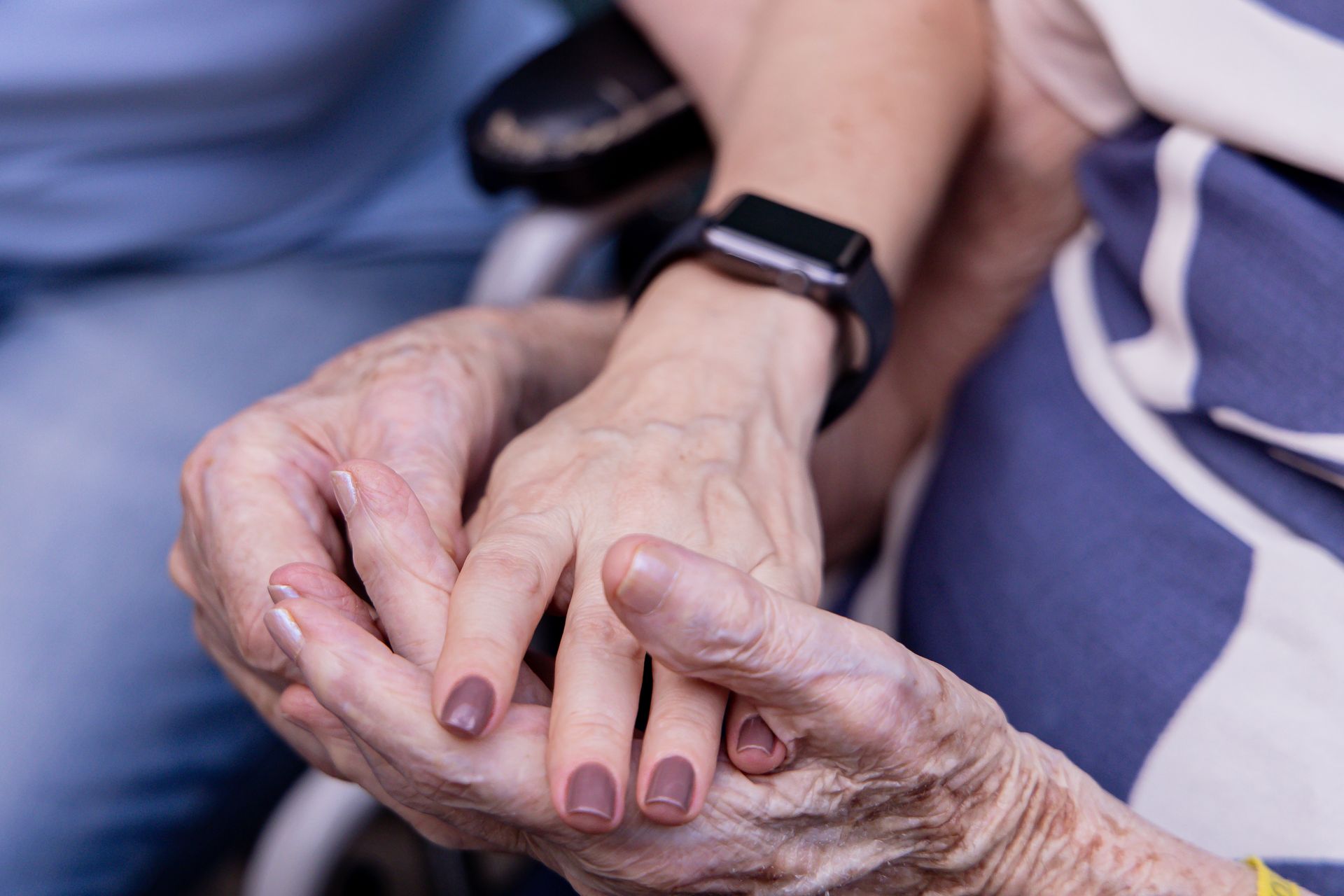
Cover image: A carer holding an older person’s hands. Photo by Patrícia Scholze on Pexels.
Write for UFI
Have a story about cities? We publish articles and photo essays from researchers, practitioners and photographers.
Pitch us at contact@urbanfrontierinsights.com