
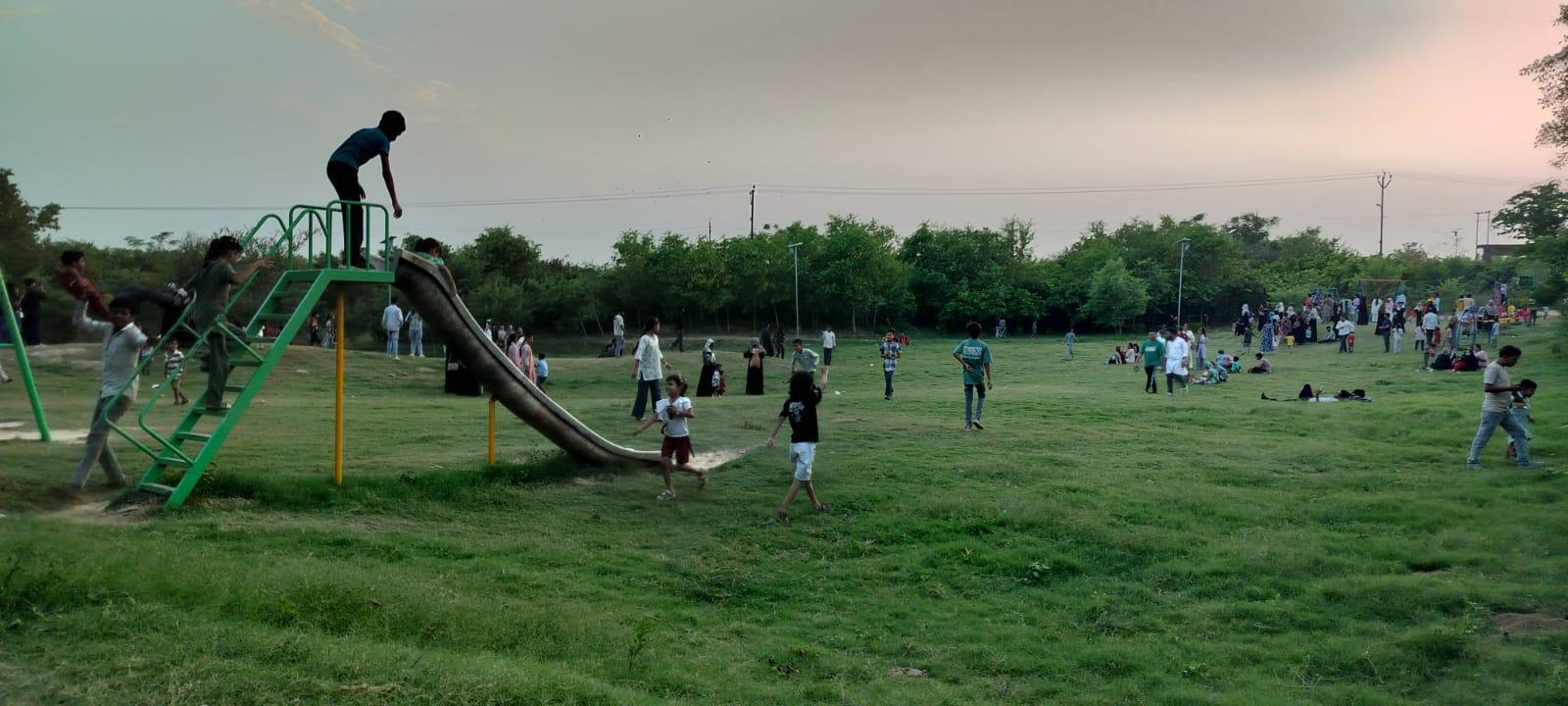
Cover photo: Visitors and children enjoying the open green space and playground facilities at Etawah Nagar Van. Photo: Arkraj Biswas.
Guest article by Arkraj Biswas, environmental researcher and data analyst.
Institutional Disclosure: This research was conducted in affiliation with project assessments under the Ministry of Environment, Forest and Climate Change (MoEFCC) and National CAMPA monitoring frameworks.
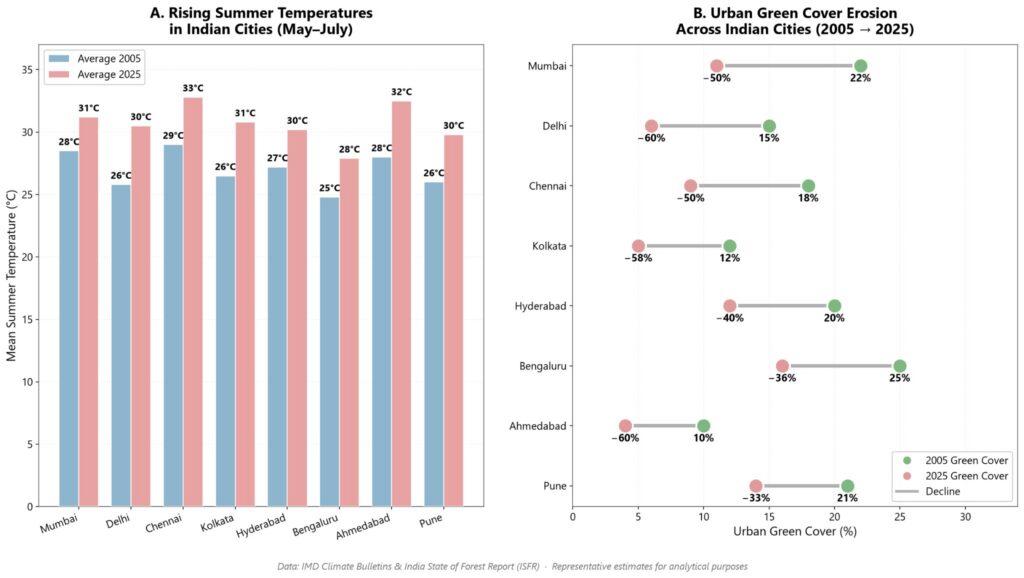
Cities are heating up every summer
Indian cities are overheating every passing year, and anyone commuting between May and July encounters the harsh reality on their body as surface heat radiates off asphalt and concrete surfaces. As the concrete structures are expanding rapidly across dense urban areas, the amount of mature and grown trees are shrinking into small and confined patches, thus leaving the ordinary residents with nothing more than just hot pavements, and continuous heat alerts. Also placing just small numbers of ornamental shrubs planted inside fenced traffic islands, that remain covered in thick layers of road dust and vehicle smoke throughout the year, these roadside plants have very little practical value when it comes to cooling the neighborhood or offering real shade to passersby.
To deal with this climate crisis in Indian cities, the Ministry of Environment, Forest and Climate Change launched the Nagar Van Yojana in the year 2020. It is being financed through the National CAMPA Fund, this scheme provides a fixed, one-time per-hectare grant to create urban forests and take care of early park maintenance.
Field reality: Funds dry up after the first year
There’s a good amount of ambition behind this scheme, but still a wide gap remains between what is approved on official files and what actually is observable on the ground. Recent field surveys (conducted during June 2026) across Uttar Pradesh, Madhya Pradesh, and Rajasthan – A total of 14 sites, also revealed some concerning patterns and these patterns are also found to keep repeating from site to site. In the first year, funds mostly arrive on time and the parks are well maintained. But from the second year on, maintenance becomes unpredictable and the state allocations rarely come through on schedule, and the parks still depend on them.
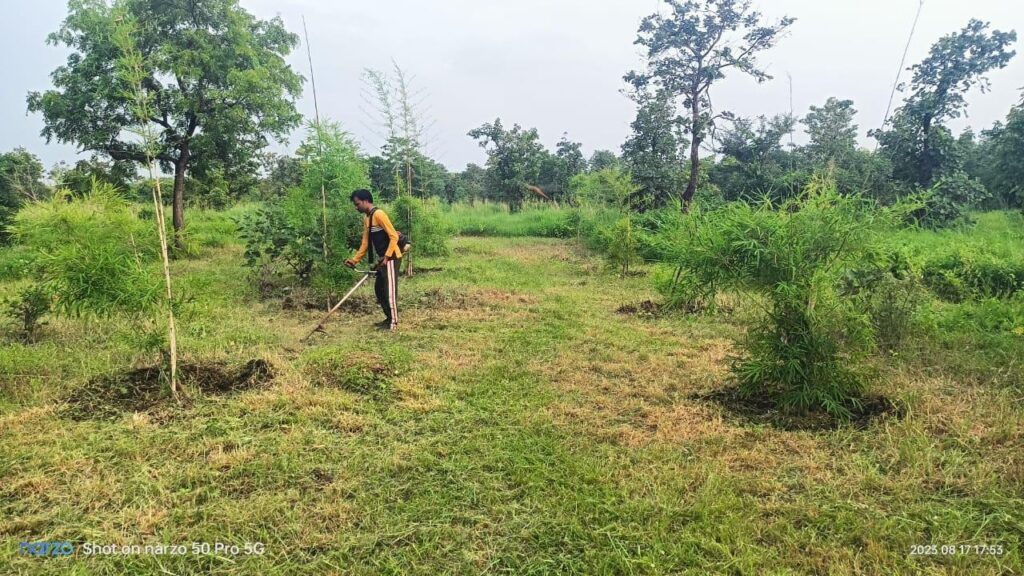
It was also found out that the biggest threat to these urban forests is not a lack of saplings, because forest department nurseries usually grow a steady supply of young plants throughout the year. Even in places like Hardoi in Uttar Pradesh, where hard alkaline soil makes it difficult for saplings to survive during harsh summers, local officers manage the situation by ordering municipal water tankers on an urgent basis.
The human cost of delayed maintenance budgets
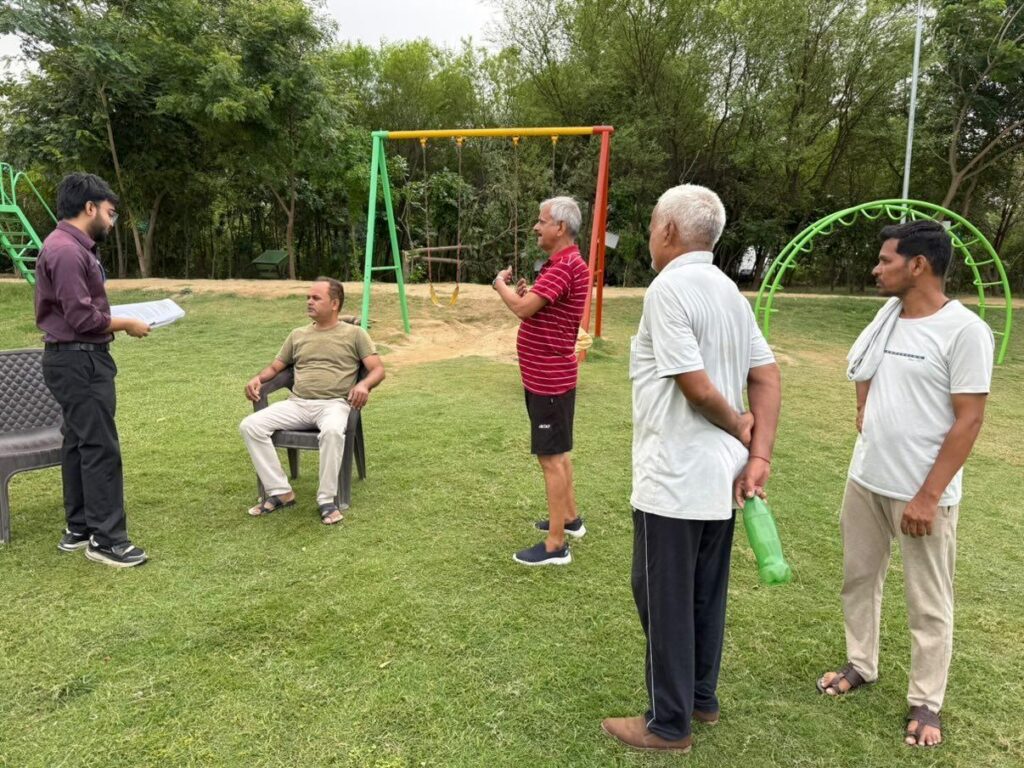
When the regular wage payments stop coming, the local guards and malis are the first to get affected, they continue to work for some time without pay just out of a sense of duty toward the trees they planted with their own hands. Many workers also have to borrow money from friends and families just to keep basic infrastructure like drinking water purifiers, and public toilets working and thus keep the park gates open for regular visitors.
“For four months, no money came into our bank accounts,” shared a daily-wage caretaker at a site in western Uttar Pradesh. “I had to borrow ₹8,000 from a local shopkeeper just to pay for my child’s school fees and keep the park’s water pump running so the young saplings wouldn’t dry up in the June heat.”
However, if funding delays continue for too long, basic facilities inevitably collapse after a time. Basic systems like toilets, drinking water systems become unused, and the damaged boundary fences remain unrepaired for months and this lack of maintenance also allows wild animals like wild boars, nilgai, and monkeys from nearby areas to enter young plantations and destroy months of slow growth in a single night. While it was also found that some nagar vans like Shahpura responded by putting up solar fencing against monkeys and Hardoi nagar van dug deep peripheral trenches to keep them away. But the main underlying problem remains the human one, as irregular wages also make staff numbers too thin, then the small field teams have to absorb heavy physical strain while their monthly wages remain vastly unpredictable.
Etawah, Uttar Pradesh: Renewable energy and water harvesting
Etawah nagar van is located in a dry ravine and heat intensive landscape in the western part of UP, and with falling water tables and extreme summer heat, Etawah Nagar Van attracts large morning and evening crowds and weekend family gatherings. The park runs quite smoothly because the department has installed the basic infrastructure that a van needs, and they have gone to an extra level. They have also installed high-capacity solar water pumps that can feed the irrigation systems, drinking water coolers, and streetlights running at almost zero running cost, by making them all solar powered. Large percolation ponds are also placed to collect rainwater to recharge local groundwater, while the park is managed jointly with the local Joint Forest Management Committee to provide working open gyms, children’s play zones, and clean water on land that was once barren and unused.
Ujjain and Sagar, Madhya Pradesh: Cultural and emotional ownership
In Madhya Pradesh, forest managers have stopped trying to build and replicate typical ornamental and decorative municipal parks like every other and instead focused on designing green spaces around local cultural beliefs. At Naulakhi Nagar Van in Ujjain and the City Forest in Sagar, visitors can plant saplings tied to their birth stars in special sections like Nakshatra Vatika, Rashi Van, or Navgrah Van, which creates an immediate emotional connection with the trees. Combined with cute walking routes like the Ram Van Aagman Path in Naulakhi, there is also a feature of no artificial lights rule in Sagar nagar van to protect nocturnal wildlife, and they also have an active WhatsApp groups for community plantation drives, these parks attract visitors naturally without requiring continuous public publicity.
Alwar and Viratnagar, Rajasthan: Trekking trails and local economic links
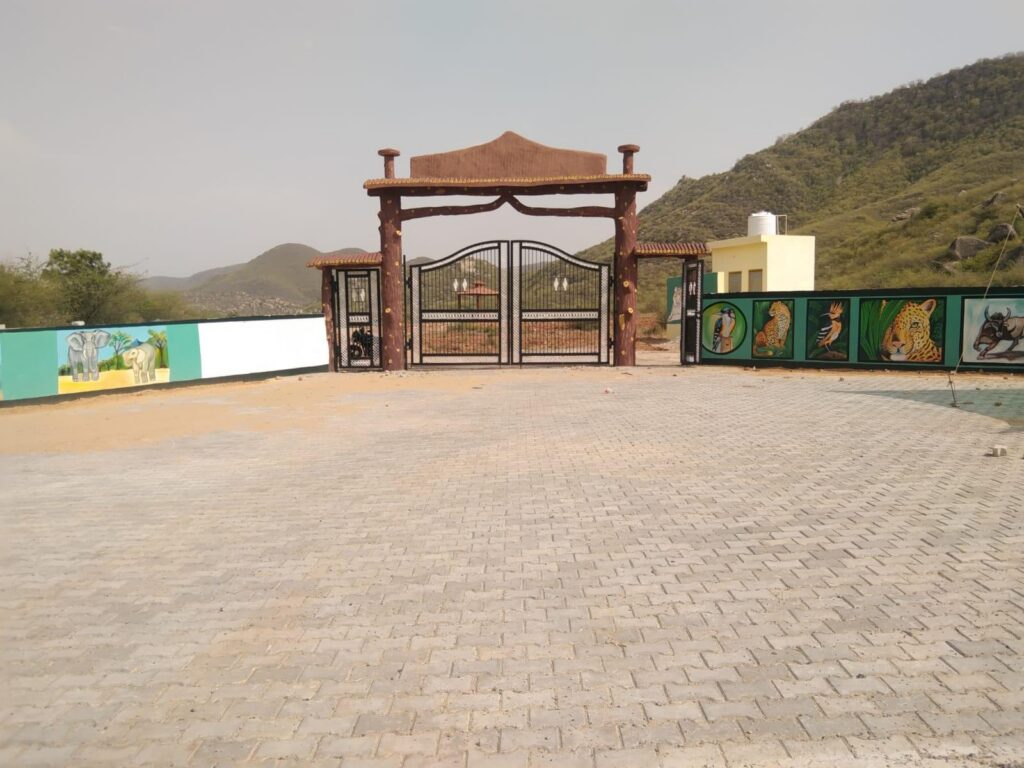
Bhugor Nagar Van in Alwar embraces its hilly and scenic terrain by offering trekking routes, sunrise and sunset viewpoints rather than just flat grass lawns. The forest features native and medicinal trees like Neem, Banyan, Arjun, Teak, and Palash along with that the Alwar nagar van also has a small bird rescue center, where trekkers regularly spot peacocks and wild birds, making visitors willing to contribute and have a dedication toward park maintenance and wildlife care.
In peripheral village site nagar vans like in Viratnagar, local villagers are allowed to collect dry grass and biomass from buffer zones for their cattle and livestock, which gives the surrounding community a direct financial reason to protect the core forest from illegal grazing and misuse. Also combining this with the awe scenic view and the remoteness of the location is itself in its form its major attraction point.
A practical two-stage solution
Only a few operational nagar van sites like Laharpur and Chandanpura in Bhopal and Naulakhi in Ujjain charge a small entry fee (12 rupees/user), while Etawah and Jaipur nagar vans are planning their own ticketing systems. Although these ticket sales are not focused on generating large profits, they can be used to provide immediate cash flow to pay guards on time and fix urgent breakdowns whenever government grants are delayed or discontinued.
To ensure that urban forests survive across India in the long run, a clear cut two-stage policy model should be implemented.
1. Update State CAMPA funding rules: State CAMPA guidelines should be amended so that every newly sanctioned urban forest gets an assured multi-year maintenance budget to cover worker wages, peak-summer watering, fence repairs and for overall park maintenance. Money should be released automatically through pre-scheduled installments linked to simple, routine site inspection reports, which will stop frontline workers from taking personal loans to keep public parks running.
2. Hand over operations to joint local committees: After two or three years of van creation and establishment, when trees have grown bigger and basic infrastructure is stable, daily operations should be handed over to a joint partnership involving the Forest Department, the Urban Local Body, and the Joint Forest Management Committee. Local committees can raise limited revenue from non-forest zones through ecotourism, regulated entry fees, and sustainable grass harvesting and following other site specific innovative and indigenous ways. Keeping morning and evening hours free for regular walkers while charging a small fee from afternoon visitors keeps access open to everyone while building a local emergency fund, while the forest department always retains land ownership to prevent unwanted commercial construction and encroachment.
This arrangement will not lead to any privatization if done in a correct way, this will also give local residents a practical recognition to use and care for these parks every day and are allowed to participate in their upkeep.
Protecting community health and civic spaces
Urban forestry is often discussed as a topic about carbon storage and city cooling, but the human impact of budget delays is equally a serious concern. When the maintenance funds stop for months and months, unpaid guards and malis are the first to suffer through the rising debt, and thus are forced to survive on informal loans, while city residents lose access to an urban green space, a shaded public place where people can walk, exercise, and can rest.
Only installing air conditioners won’t cool our cities. Real cooling comes from living forests that function like a city’s lungs and those forests need timely wages for caretakers, local revenue, and daily public use to thrive. The Nagar Van Yojana has the framework, what’s missing is a financial system that funds trees for their entire lifespan, not just the planting ceremony.
About the author
Arkraj Biswas is an environmental researcher and data analyst specializing in urban green infrastructure, climate adaptation, and public forestry programs. In 2026, he led ground assessments, key informant interviews, and spatial evaluations across urban forest sites in UP, MP, and Rajasthan. He serves as a Research Associate at National CAMPA under the Ministry of Environment, Forest and Climate Change (MoEFCC).