
Last week, at the World Bank–IMF Annual Meetings in Bangkok, Union Finance Minister Nirmala Sitharaman said “municipal bonds can enable cities to mobilise capital market resources for urban infrastructure”, and that the “investment readiness of a city depends on credible accounts” [1]. She called for public investment, stronger municipal finances, development finance and private capital to work together [2]. This week brought reports of a proposed World Bank-backed project, SUTRA (Sustainable Urban Transformation in Rajasthan Accelerated), estimated at $385.7 million for 32 urban local bodies around Jaipur, Jodhpur, Kota and Bharatpur [3], while Kerala’s ministers met to prepare proposals for the Centre’s new Urban Challenge Fund [4]. Three stories, one question: who pays for India’s cities, and who should?
A large bill and thin wallets
The World Bank estimated in 2022 that India must invest $840 billion in urban infrastructure over 15 years, about $55 billion a year, as its urban population heads towards 600 million by 2036. Government investment was about $16 billion in 2018. Central and state governments financed over 75 per cent of city infrastructure, urban local bodies (ULBs) about 15 per cent from their own surpluses, and private sources only 5 per cent [5].
The Reserve Bank of India’s first Report on Municipal Finances (November 2022) found municipal revenue stagnant at around 1 per cent of GDP for over a decade, against 7.4 per cent in Brazil and 6 per cent in South Africa [6]. The World Bank put urban property tax at 0.15 per cent of GDP, compared with 0.3–0.6 per cent in other low- and middle-income countries [5]. The RBI’s 2024 edition, covering 232 municipal corporations, put their revenue receipts at 0.6 per cent of GDP in 2023–24, against 9.2 per cent for the Centre and 14.6 per cent for the states. Own taxes were only 30 per cent of receipts, and property tax made up more than 60 per cent of own tax revenue [7].
The Comptroller and Auditor General’s 2024 compendium, covering 393 urban local governments in 18 states, found that own revenue averaged 32 per cent of total revenue, that only 56 per cent of property tax demand was collected, and that on average only four of the 18 Twelfth Schedule functions had been effectively devolved [8]. Cities are asked to behave like borrowers while lacking control over their own taxes, staff and functions.
Grants, missions and the strings attached
The 15th Finance Commission tied urban grants from 2021–22 to property tax: states had to notify floor rates and show collections improving in step with GSDP growth [9]. The 16th Finance Commission (report tabled 1 February 2026) recommended ₹3,56,257 crore for ULBs over 2026–31, about 45 per cent of local body grants. Entry conditions include publishing audited accounts and constituting State Finance Commissions on time [10].
The Smart Cities Mission’s union budget of ₹47,652 crore supported 8,067 projects worth ₹1.64 lakh crore, 94 per cent complete by May 2025 [11]. AMRUT 2.0 has an indicative outlay of ₹2,99,000 crore, with a central share of ₹76,760 crore [12]. PMAY-Urban 2.0 targets one crore houses with ₹2.30 lakh crore of government assistance [13]. Urban development investment has surged, but such programmes taught cities to look upward to Delhi and state capitals rather than to their own taxpayers.
The newest instrument tries to change that. The Urban Challenge Fund, announced in the Union Budget 2025–26 [14] and approved by the Cabinet in February 2026, offers ₹1 lakh crore of central assistance to mobilise ₹4 lakh crore of investment over five years. It funds up to 25 per cent of a bankable project only if at least 50 per cent comes from bonds, bank loans or PPPs, with further releases tied to reforms. A ₹5,000 crore credit guarantee sub-scheme backs first loans for ULBs in north-eastern and hilly states and towns under one lakh people, up to 70 per cent of the loan or ₹7 crore [15].
Borrowing: development banks and bonds
SUTRA shows the typical multilateral structure: a $270 million IBRD loan plus $115.7 million from the Rajasthan government, covering heritage, transport, waste, heat and waterlogging, and notably municipal revenue administration and borrowing capacity. Board approval is expected by July 2027 [3]. Such loans are long and cheap, but the state carries the repayment risk and councils can be sidelined.
Municipal bonds promise more autonomy. SEBI’s 2015 regulations require a credit rating, no default in the preceding 365 days and dedicated accounts for interest and sinking funds [16]. Pune’s ₹200 crore issue in June 2017 for 24×7 water supply, oversubscribed six times, revived the market [17]. Green bonds followed in Ghaziabad (₹150 crore, 2021), Indore (₹244 crore, 2023), Ahmedabad (₹200 crore, 2024) and Vadodara (₹100 crore, 2024) [7], in line with India’s low-carbon urban policy agenda. Yet outstanding municipal bonds totalled ₹4,204 crore in March 2024 [7]. Meera and Dinesh Mehta count about ₹6,100 crore raised by 25 cities in three decades, driven largely by incentives such as AMRUT’s ₹13 crore per ₹100 crore, mostly at five-year tenors and bought by public institutions [18].
Bonds are no cure-all. A 2026 analysis on the NISM blog notes that Pune’s water project never took off, leaving proceeds idle while the city serviced the debt: “investors won but citizens lost” [17]. Pooling helps: Sitharaman cited a Tamil Nadu bond through which 13 ULBs jointly raised funds for water and sanitation [1].
Private capital and the value of land
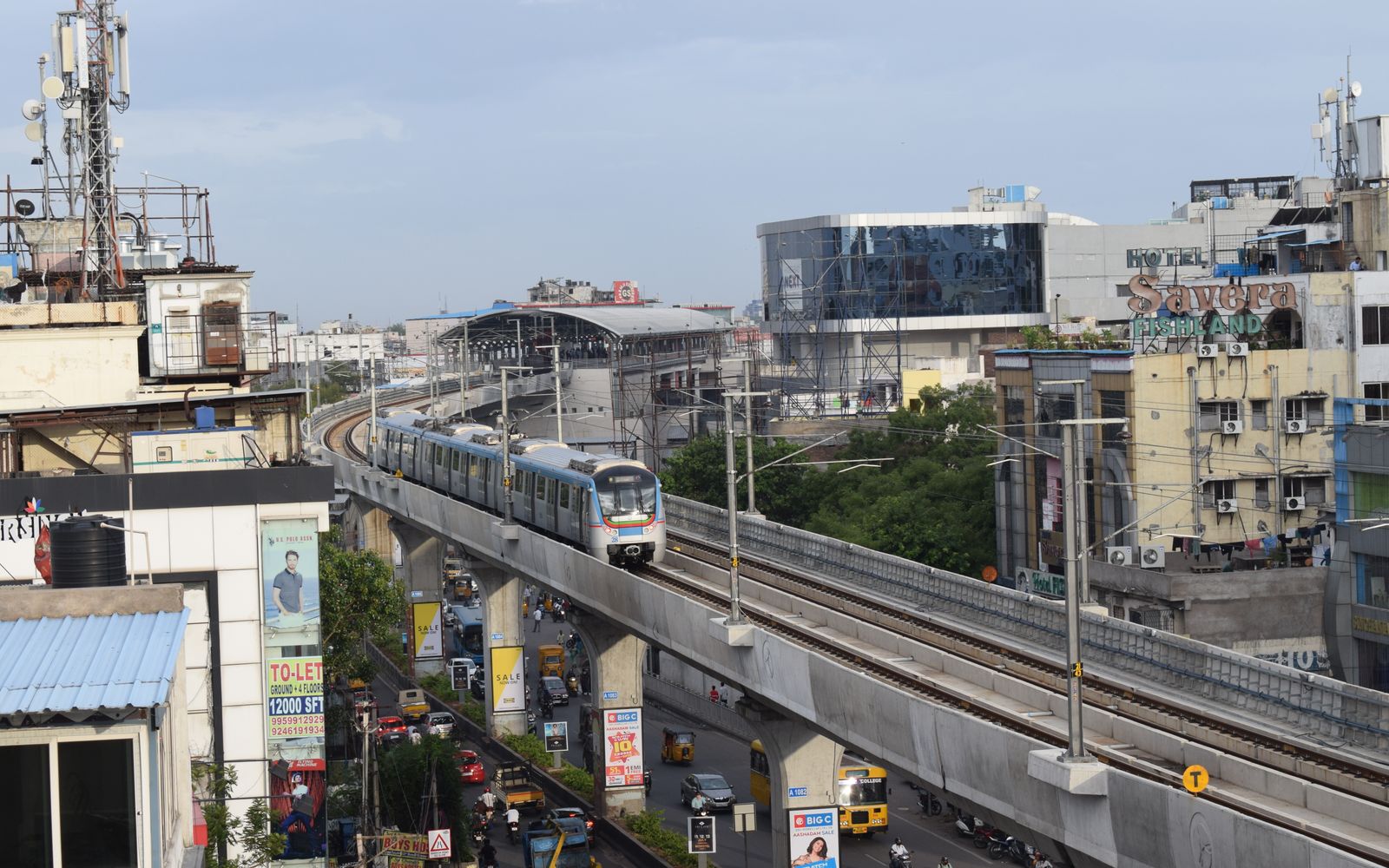
Public–private partnerships shift risk to firms only while revenues hold up. Hyderabad’s 69-km metro, awarded to L&T in 2010 as a 35-year design-build-finance-operate-transfer concession, is a warning. After a 169-day Covid shutdown and mounting losses, the state took over in 2026, paying ₹1,461.47 crore for L&T’s 90 per cent stake and assuming ₹13,538 crore of debt [19]. When a PPP fails, the risk returns to the public balance sheet.
Land-based finance taps value created by public investment. The Value Capture Finance Policy Framework lists betterment levies, impact fees, premium FAR, transferable development rights, vacant land tax and land pooling [20]. In Mumbai, two auctions of 13 hectares in the Bandra Kurla Complex in 2006–07 raised ₹5,100 crore for MMRDA, and Maharashtra levies a 1 per cent stamp duty surcharge for urban transport [20]. But land markets are cyclical, and one-off sales should not fund recurring costs.
Weighing the options
| Source | How it works | Strengths | Risks |
|---|---|---|---|
| Property tax and user charges | Levied by ULBs on property and services | Local, recurring, accountable to residents | Outdated valuations, weak collection, burden on the poor |
| Finance Commission and state transfers | Formula-based, increasingly conditional grants | Predictable; help poorer towns | Dependence, delays |
| Central missions and challenge funds | Project funding with state and city shares | Scale; reform incentives | Top-down priorities; upkeep left to cities |
| Multilateral loans | Long-tenor loans via states | Low cost, technical support | State repayment risk; slow; may bypass councils |
| Municipal and green bonds | Rated debt sold on capital markets | Market discipline, disclosure | Favour large, rated cities; idle proceeds |
| PPPs | Private firm builds or operates for fees or annuities | Capital and operating skills | Demand risk, renegotiation, hidden liabilities |
| Land value capture | Levies, premium FAR, land sales near public works | Recovers windfalls created by public money | Cyclical; can displace low-income residents |
Every option lands on residents, as taxpayers, service users or future taxpayers servicing debt; the equity question is which residents. Transfers spread costs nationally; bonds and PPPs reward cities already large and creditworthy; unguarded user charges hit the poorest hardest.
What should change
1. Fix property tax first. The RBI recommends GIS mapping, digital payments and dynamic valuation [7]. Lifting collection above 56 per cent of demand [8] adds revenue without new taxes, and digital twins and spatial data can keep valuations current.
2. Price services fairly, and protect the poor. Water and waste charges should recover operating costs, with lifeline tariffs keeping a basic monthly quantity cheap for low-income households. Affordable water is urban health policy too.
3. Build creditworthiness, and pool smaller cities. Audited accounts are now an entry ticket for grants [10] and ratings for bonds [16]. States should create pooled bond vehicles, as Tamil Nadu has [1], and use the credit guarantee sub-scheme to bring first-time borrowers to market [15].
4. Capture land value around metros. Transit corridors should carry betterment levies and premium FAR [20], with proceeds ring-fenced for transit and affordable housing.
5. Open the books. Publish budgets, audited statements and project progress online, and pilot participatory budgeting so residents see what their taxes buy.
6. Empower ward committees. The CAG found that only nine of 15 states with data had set up ward committees in any city, and only 10 of 18 constituted State Finance Commissions on schedule [8]. The 74th Amendment envisaged local democracy; cities need an authority map that matches money to responsibility.
Private capital will follow cities that can show what they own, what they earn and who decides. Until then, the answer to “who pays?” remains: someone else, somewhere else.
References
1. ANI. (2026, October 16). FM Sitharaman pushes municipal bonds for urban funding amid rising borrowing costs. ANI News. aninews.in
2. Prop News Time. (2026, October 19). Nirmala Sitharaman calls for private capital to make Indian cities financially sustainable. Prop News Time. propnewstime.com
3. IANS. (2026, October 21). World Bank’s ‘SUTRA’ project to transform Rajasthan’s urban landscape. Punjab Kesari (English). english.punjabkesari.com
4. PTI. (2026, October 21). Kerala to seek central funds for key infrastructure projects in Thiruvananthapuram. Outlook. outlookindia.com
5. World Bank. (2022, November 14). India’s urban infrastructure needs to cross $840 billion over next 15 years: New World Bank report [Press release]. World Bank. worldbank.org
6. Reserve Bank of India. (2022). Report on Municipal Finances. RBI (hosted on MoHUA’s CityFinance portal). cityfinance.in
7. Reserve Bank of India. (2024). Report on Municipal Finances: Own Sources of Revenue Generation in Municipal Corporations. RBI. rbi.org.in
8. Comptroller and Auditor General of India. (2024). Compendium of Performance Audits on the Implementation of the 74th Constitutional Amendment Act, 1992: Landscape across India (Vol. I). CAG. saiindia.gov.in
9. Ministry of Housing and Urban Affairs. (2020, September 22). ULBs to qualify for Finance Commission grants from 2021-22 onwards. Press Information Bureau. pib.gov.in
10. PRS Legislative Research. (2026). Report of the 16th Finance Commission for 2026-31: Summary. PRS India. prsindia.org
11. Press Information Bureau. (2025, June 24). 10 Years of Smart Cities Mission. PIB. pib.gov.in
12. Press Information Bureau. (2025, June 25). 10 Years of AMRUT: Transforming Cities, Improving Lives. PIB. static.pib.gov.in
13. Press Information Bureau. (2024, August 9). Cabinet approves Pradhan Mantri Awas Yojana-Urban 2.0 Scheme. PIB. pib.gov.in
14. ANI. (2025, February 1). Budget 2025 allocates Rs 1 lakh crore Urban Challenge Fund to boost cities as growth hubs. The Tribune. tribuneindia.com
15. Prime Minister’s Office. (2026, February 14). Cabinet approves Rs. One Lakh Crore Urban Challenge Fund to drive market-led urban transformation. PMIndia. pmindia.gov.in
16. Securities and Exchange Board of India. (2023). Municipal Debt Securities: Key Regulatory Framework. SEBI. sebi.gov.in
17. Rao, A. (2026, June 15). Municipal bonds: When investors won but citizens lost. NISM Blog. nism.ac.in
18. Mehta, M., & Mehta, D. (2026). Municipal bonds in India: A 30-year story still unfinished. Ideas for India. ideasforindia.in
19. The Week. (2026, April 30). Why Larsen & Toubro had to hand over Hyderabad Metro to Telangana government. The Week. theweek.in
20. Ministry of Urban Development. (2017). Value Capture Finance Policy Framework. Government of India. pppinindia.gov.in
Cover image: a Hyderabad Metro train on its elevated line above the city. Photo by Alok Das on Pexels.
Write for UFI
Have a story about cities? We publish articles and photo essays from researchers, practitioners and photographers.
Pitch us at contact@urbanfrontierinsights.com