A Nursery Inside a Demolition Site
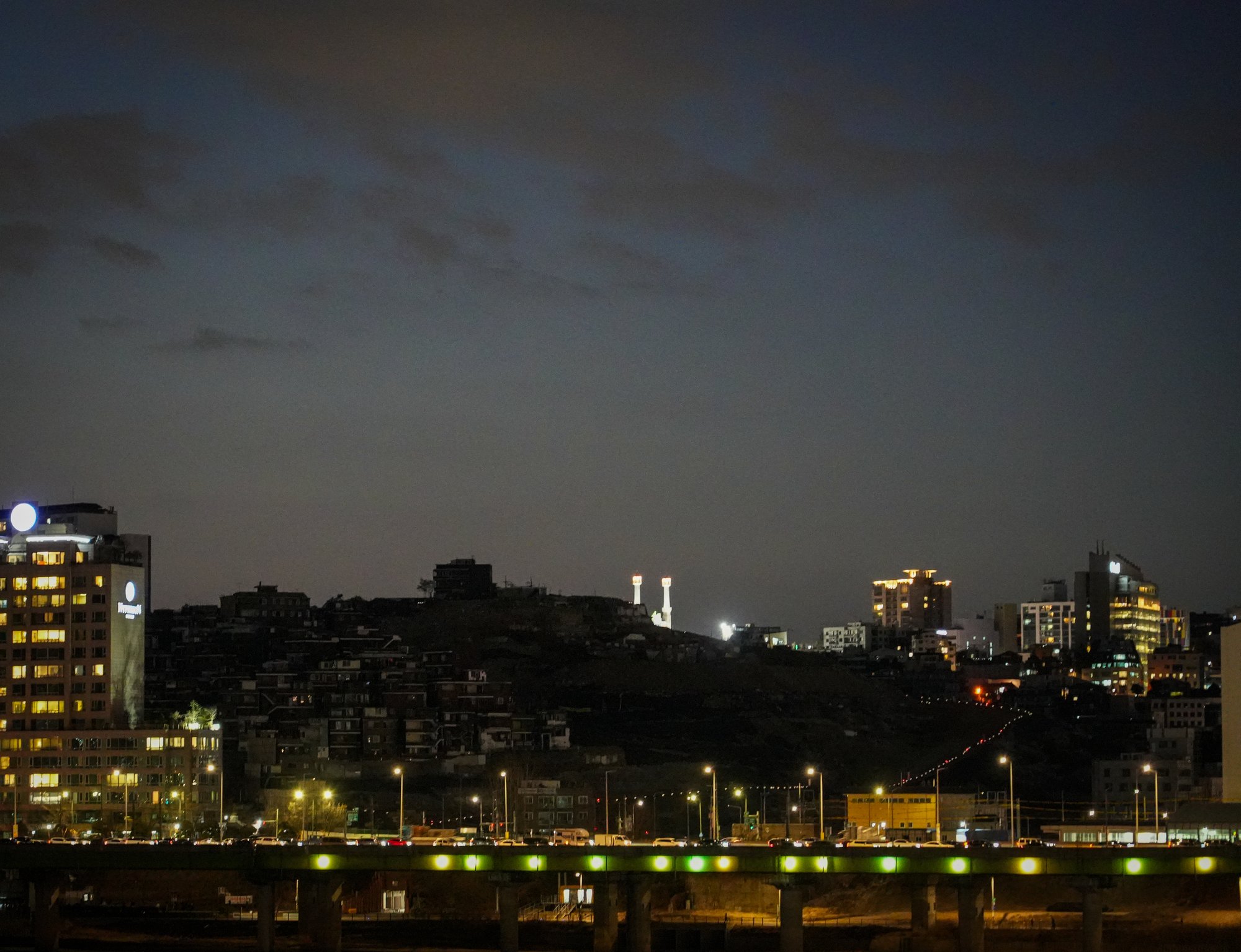
Ara was already pregnant when I began trying to move her out of a redevelopment area in Yongsan, Seoul.
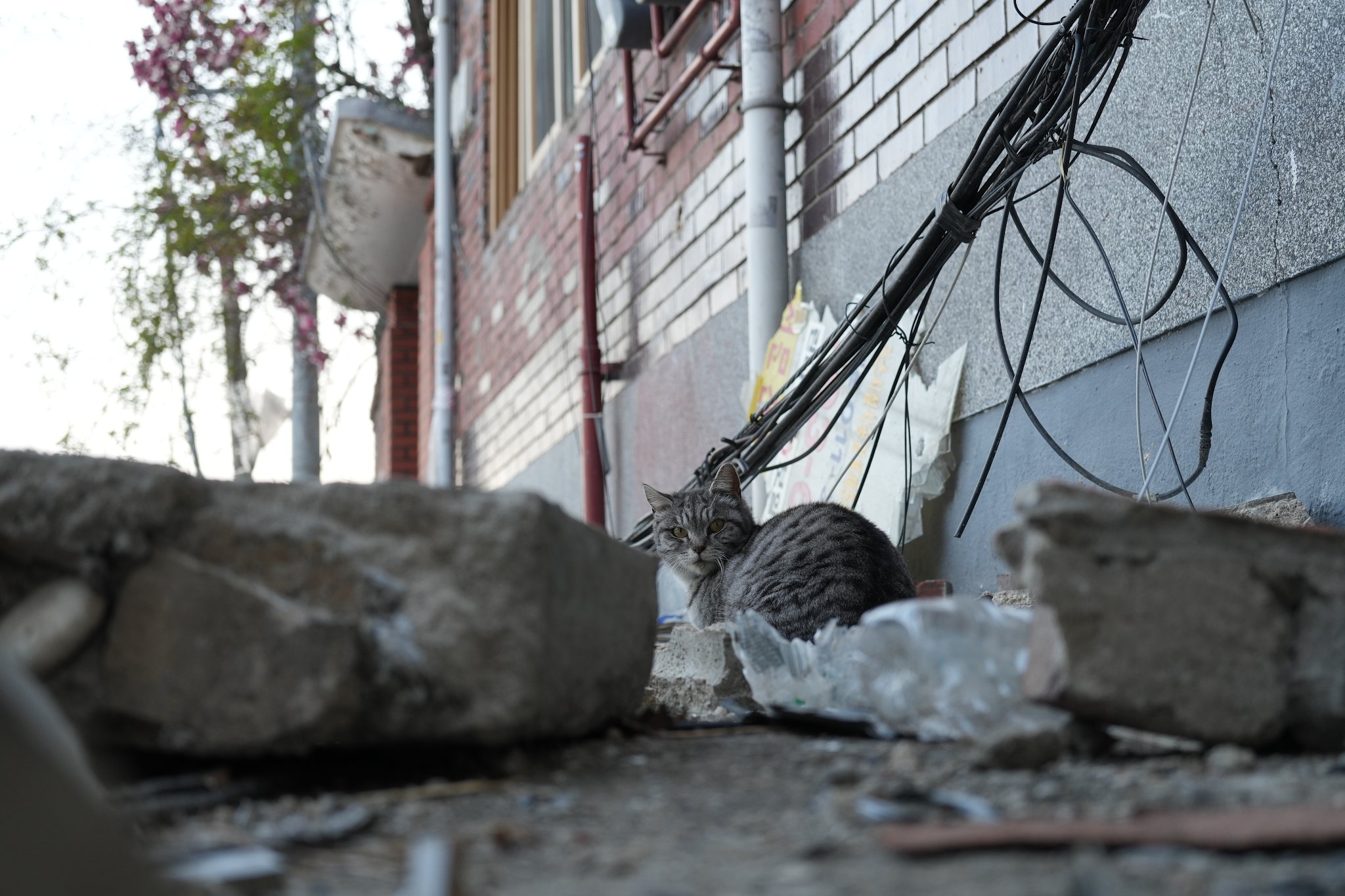
She was living with other cats in and around a partially collapsed building. The place was unstable, but it was the only home she knew. There were ledges from which she could watch the street, cavities where a cat could disappear and familiar paths between the buildings. For Ara, these were not ruins. They were the map of her daily life and the place where she was preparing to give birth.
Demolition was beginning. The cats around her needed to be removed before access disappeared or the structure became more dangerous. We were able to rescue her companions, but Ara would not enter the trap. She stayed behind.
After the others left, I would look up and see her on the rooftop of an abandoned house. She watched while I brought food. The distance between us was not large, but it held everything she did not yet trust. A pregnant cat has strong reasons to be cautious. Entering a metal trap meant leaving the territory that had kept her alive.
Day after day, the building became quieter around her. Eventually Ara was completely alone.
I kept returning because the alternative was to leave a heavily pregnant cat at a site that was actively changing. After hours of waiting during one trapping attempt, Ara finally stepped inside. She was taken directly to a foster home so that she would not have to give birth in the demolition zone.
At that moment, it felt as though the most dangerous part of the rescue had ended. It had not.
A Birth That Became an Emergency
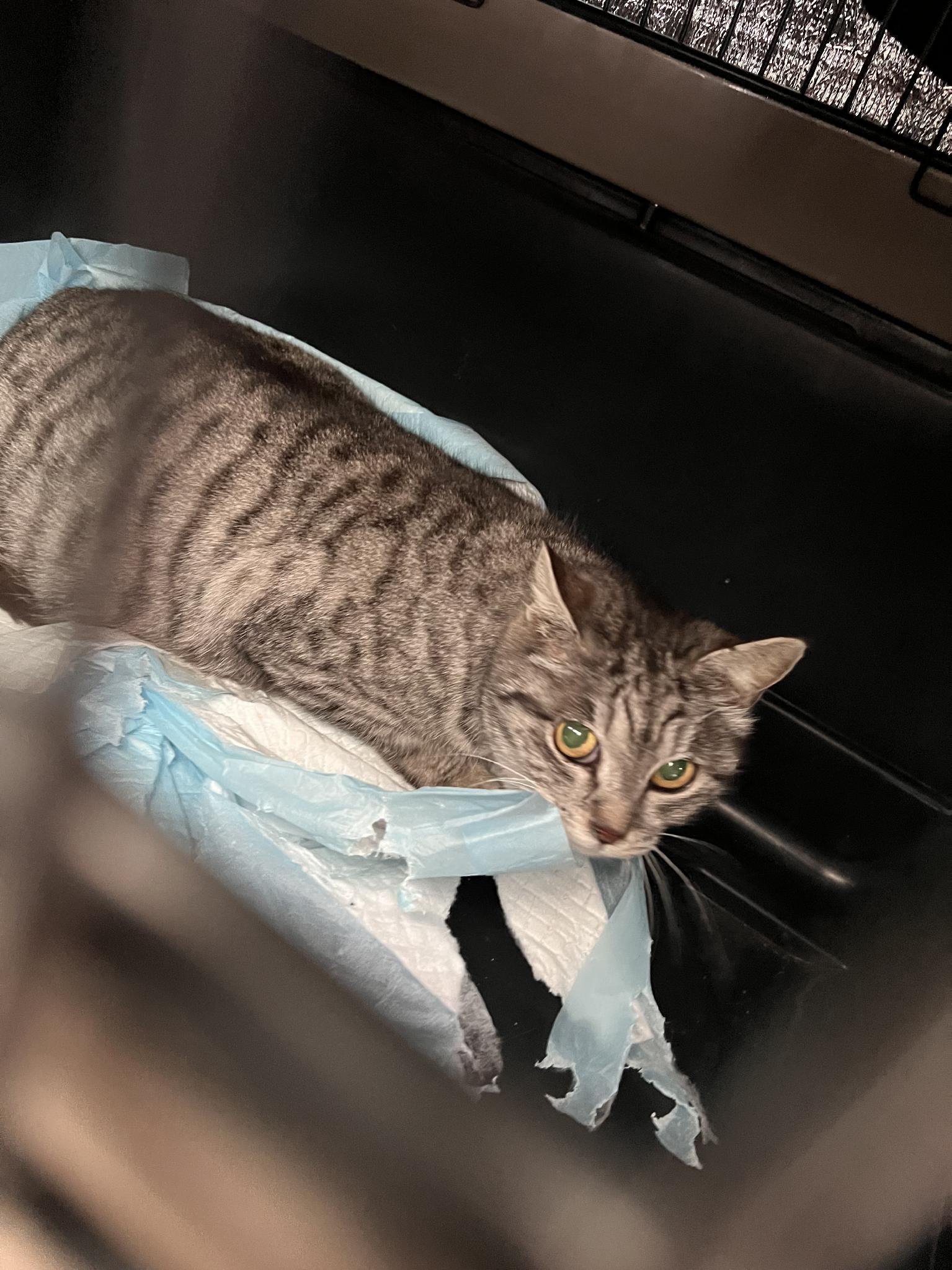
Ara went into labour soon after her rescue. Her first kitten died shortly after birth. Her second kitten, Ari, survived. A third kitten died before Ara could deliver it, putting her own life in danger.
In the early hours of the morning, Ara was taken to an emergency veterinary clinic. She needed surgery to remove the kitten that remained inside her. The veterinarian performed an emergency caesarean section and spayed her at the same time.
Newborn Ari could not simply wait without care while Ara was in surgery and beginning recovery. A human foster kept the kitten warm and fed. The next day, we faced another difficult decision: whether to reunite a tiny newborn with a mother who was exhausted, grieving and in pain.
There was no way to explain the separation to Ara. There was also no guarantee that she would accept Ari after the interruption. We watched closely and prepared to step in.
Ara accepted her baby immediately.
She curled around Ari and resumed the work of a mother despite the surgery she had just endured. The moment was not dramatic from the outside. It was a small kitten finding warmth against a tired body. For everyone who had worried through the night, it felt enormous.
The Litter That Arrived Next
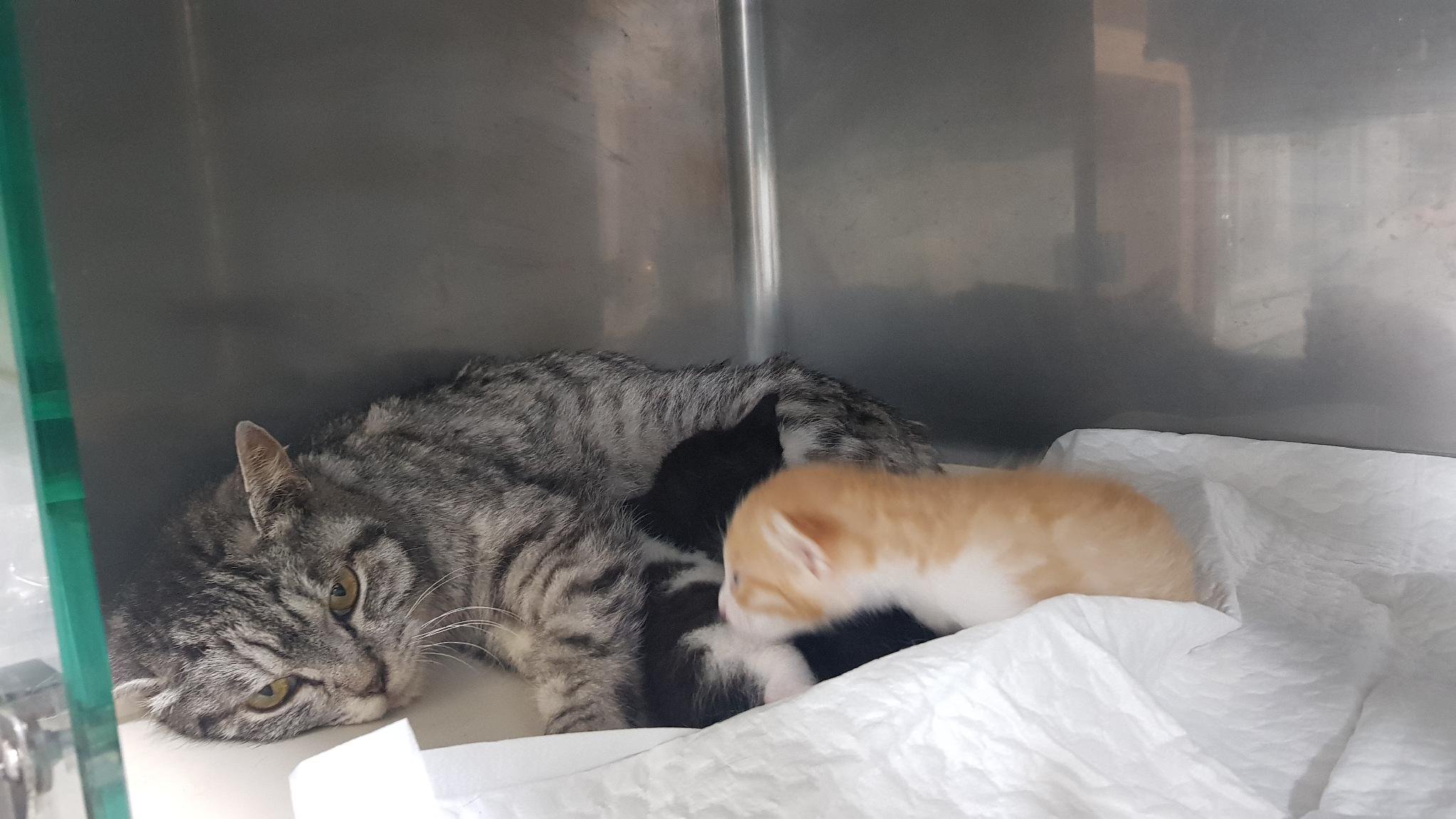
Within days, another emergency reached us.
A different pregnant street cat had been hit by a car and delivered five kittens about a week prematurely. She was unable to care for them. Premature kittens need constant warmth, feeding and stimulation, and their chances can change from one hour to the next.
Ara was still recovering from surgery. She had lost two of her own kittens and had only just been reunited with Ari. Asking her to receive another litter was not a simple or automatic choice. It required close observation, a safe foster environment and the willingness to remove the kittens if Ara showed distress.
When the five newborns were placed near her, Ara welcomed them.
She allowed them to nurse and gathered them against her alongside Ari. The body that had just survived an emergency became a place of safety for kittens from another mother.
Not all of them survived. Only two of the five premature kittens lived. Their deaths were painful reminders that care does not guarantee an outcome, especially when newborns arrive too early and after trauma. Rescue stories are often told by counting the animals who make it. The losses remain part of the truth.
Ara continued caring for the two survivors and Ari together. She did not separate the kitten born to her from the kittens placed beside her. She raised all three as her own.
What the Fence Does Not Show
Ara’s story began with redevelopment, but the emergency did not end when she crossed the boundary of the site.
A construction fence can make the visible problem look spatial: a cat is on the wrong side and needs to be moved. In practice, the rescue continues through transport, labour, surgery, neonatal care, foster space and weeks of monitoring. Every stage depends on someone being available at the exact moment the next problem appears.
The demolition site had already removed Ara’s stable territory. Her pregnancy narrowed the time available. The birth created a veterinary emergency. Her recovery overlapped with the arrival of five premature kittens from a completely separate case. What looks like one rescue from the street became several connected care pathways indoors.
This is common in small independent rescues. A trap is the most visible tool, but it is not the solution by itself. Before setting one, I need to know where the cat can go, which clinic can receive an urgent case, who can provide recovery care and what will happen if the expected plan changes overnight.
Ara also reminded me that animal behaviour cannot be reduced to a label. At the demolition site, she was the cat who refused the trap. In foster care, she was the mother who accepted six kittens during the most painful days of her life. Caution and tenderness were not opposites. Both were ways she protected life.
Still Together
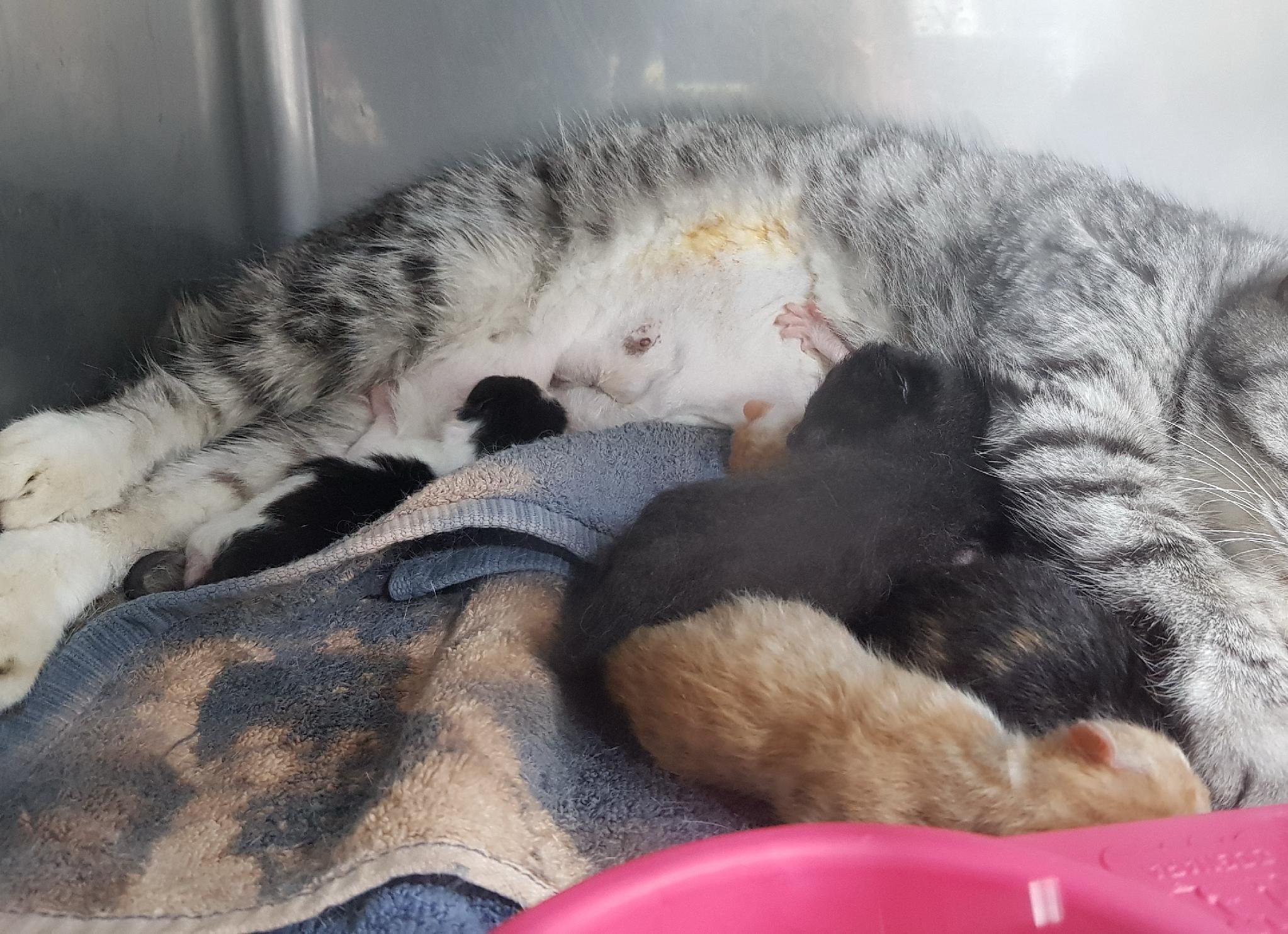
Ara, Ari and the two surviving foster kittens are now together in foster care. The kittens have grown beyond the fragile first days, and Ara continues to treat them as her family.
Indoors, she is gentle but shy. The traits that helped her survive outdoors did not disappear when a door closed behind her. She needs people who understand that trust may arrive slowly and that a quiet cat is still communicating.
Our hope is to find a permanent home that will adopt Ara together with one of the kittens she raised. After losing her territory and two of her own babies, she should not have to lose every bond again in order to be considered rescued.
I think often about the first images of Ara watching from the rooftop. She appeared to be alone in a building everyone else was leaving. We could not yet see the family she would create or the lives that would depend on her once she reached safety.
Urban redevelopment is usually measured in buildings removed and homes constructed. Ara’s story asks for another measure: whether the lives already inside the changing block were given enough time, care and continuity to survive the transition.
She lost two kittens. She then opened her body and her trust to five more. Three young cats are alive beside her now, and all of them know her as their mother.
About the Author

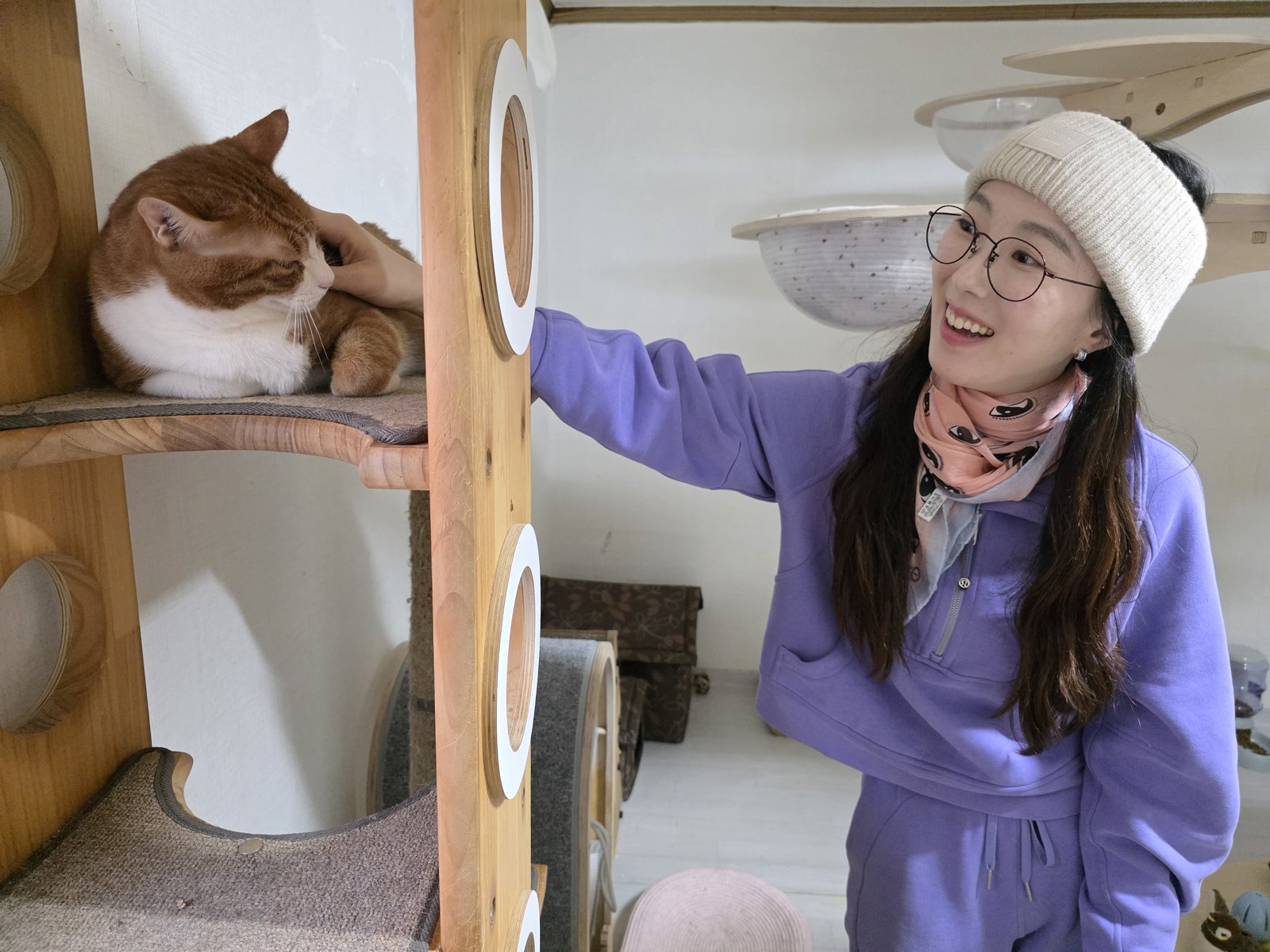
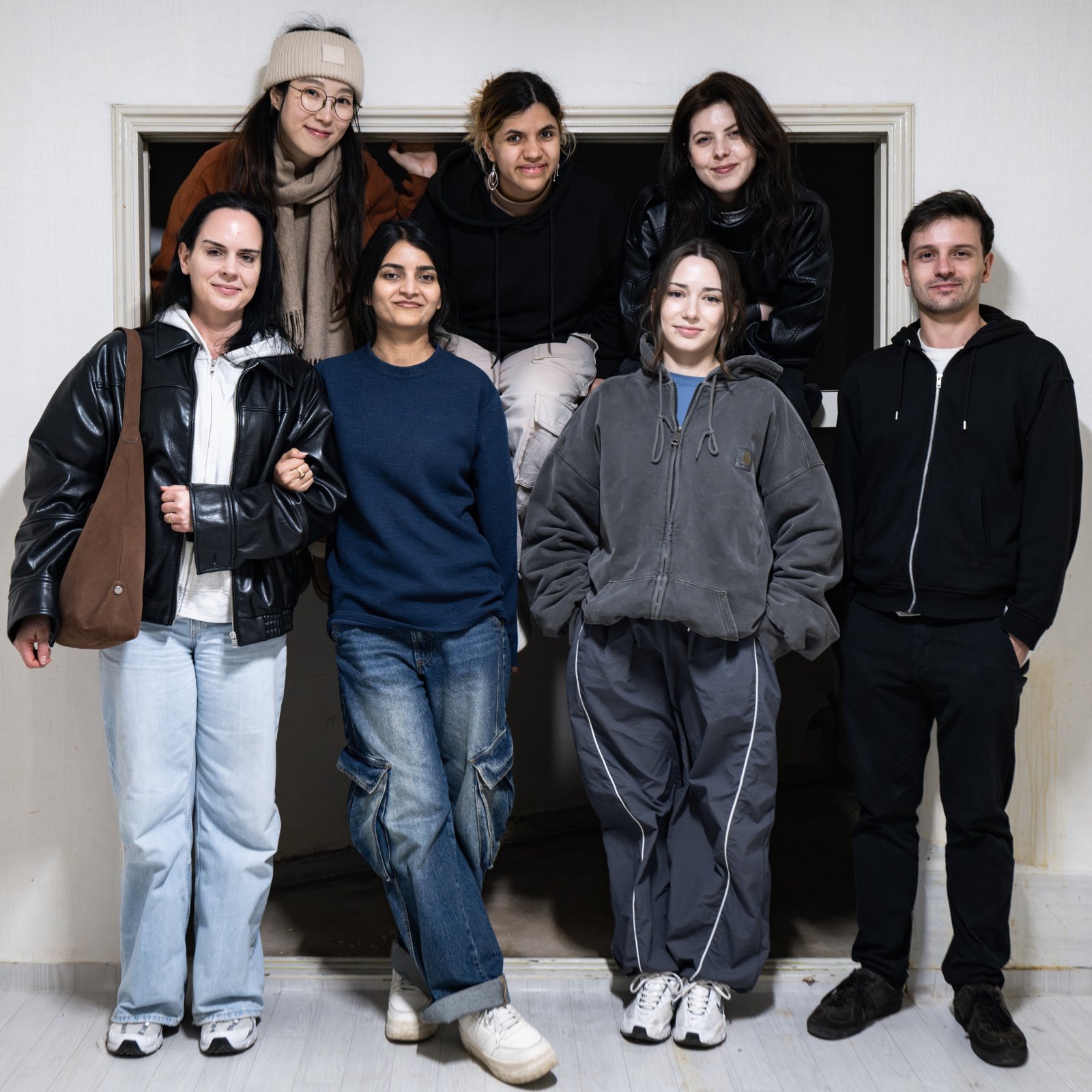
Julie Choi runs YongsanCats, an independent street-cat rescue effort in Seoul. She coordinates field rescue, veterinary treatment, volunteers, foster care and adoption for cats mostly affected by redevelopment.