
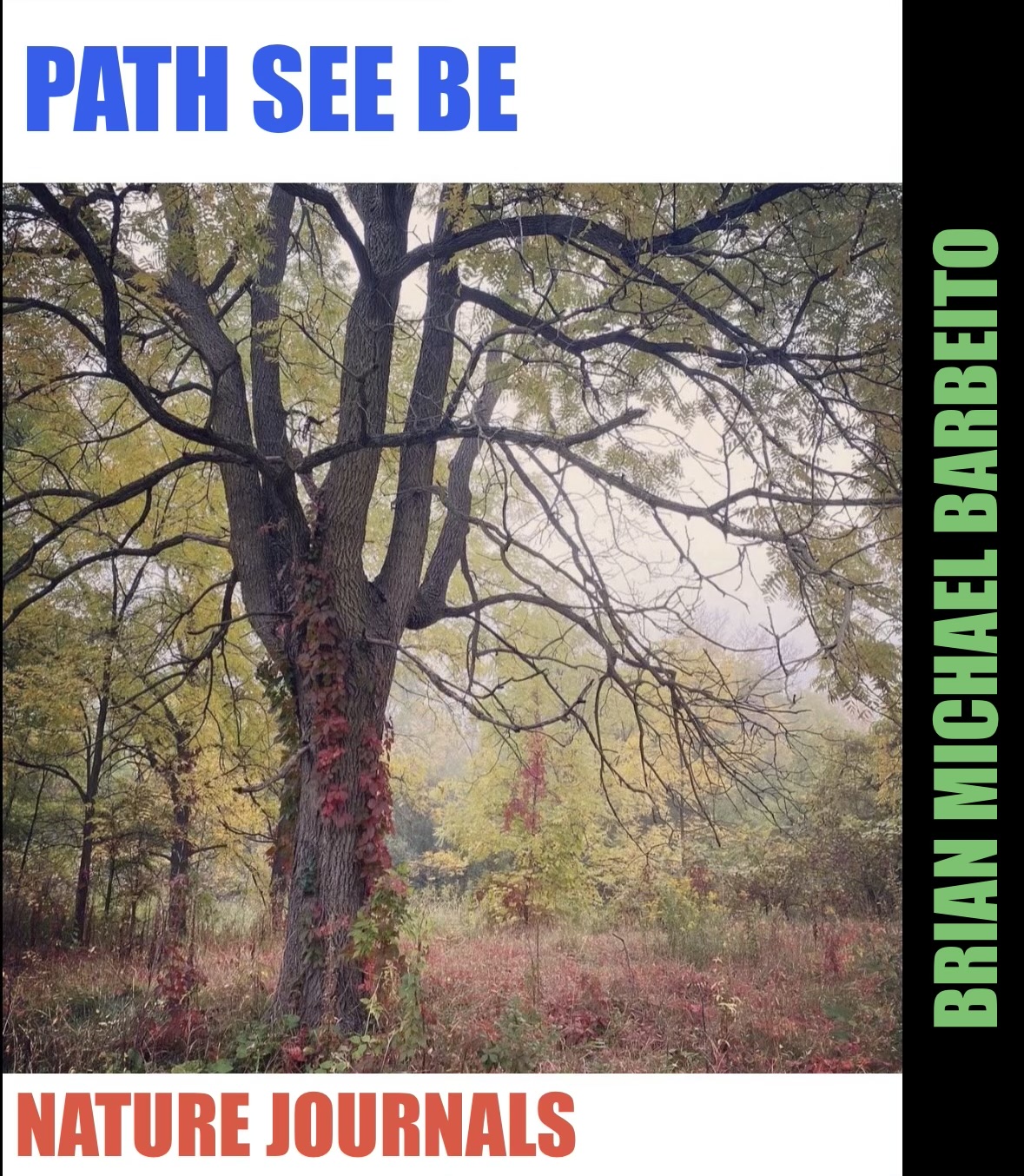
Cover photo: Brian Michael Barbeito.
A wooden walkway, a soulful bridge and a tall old tree — the wetland path where herons wait, developers build, and a walker pauses to see and be.
Prose and photographs by Brian Michael Barbeito
There is an entrance from the roads. The long wooden walkway has railings, and the beginning has sumac red and tall. There are also ducks usually, and geese fly by. Sometimes the heron waits there looking for a fish. Turtles on a log, and little fish swimming around. If there is a long time with no rain, it dries up, and then it’s terrible and I almost say a prayer that it might rain again. The water really makes the ecosystem the way words make a book or paint makes a painting.
Some strange berries grow over the railings, and they are light blue and dark blue. Not an expert, I don’t eat berries or mushrooms just in case, save for raspberries wild. I’ve seen the place in all seasons. There is a lot of dried flaxen sun-bleached wood there. A pastor, from the southern United States, named Brian also, was walking there and we briefly spoke. I asked him some questions, and he said he liked the trees and they reminded him of home. Some other souls are the bird watching lady that looks to be literally a hundred years old but each year shows up walking with her little binoculars. Also, some bike riders and joggers and the photographers with big lenses that wait patiently to see the birds, sometimes swans in an adjacent pond.
There is a bridge and it’s soulful. Half metal and half wooden. Says not to salt in the winter. Perhaps salt harms the bridge and the ecosystem. They keep building around it all, but there isn’t the proper room. Yet I suppose there is money to be made for the developers. But it’s too bad, because eventually it will harm the green space, the wildflowers, the flora and fauna, the air. Might things change one day and there be new laws, ones that are followed and might they put caps and limits on excessive and environmentally harmful development.
Beyond the bridge a little bit is that tall old tree. Vines growing on it. And a stream meanders not too far behind. Coyotes. Deer. Many berries. It gives the feeling of vastness and wilderness because it is wild, long, and wide. You can’t see the end and the paths that go into it cease not too long after they begin. There are a few homeless people that live in tents and you see them venture out, and if you think about it, though the towns and such take their tents when they find them, those homeless souls aren’t really hurting anyone but just trying to survive. I used to work with the homeless and often the shelters are full so there is nowhere to go.
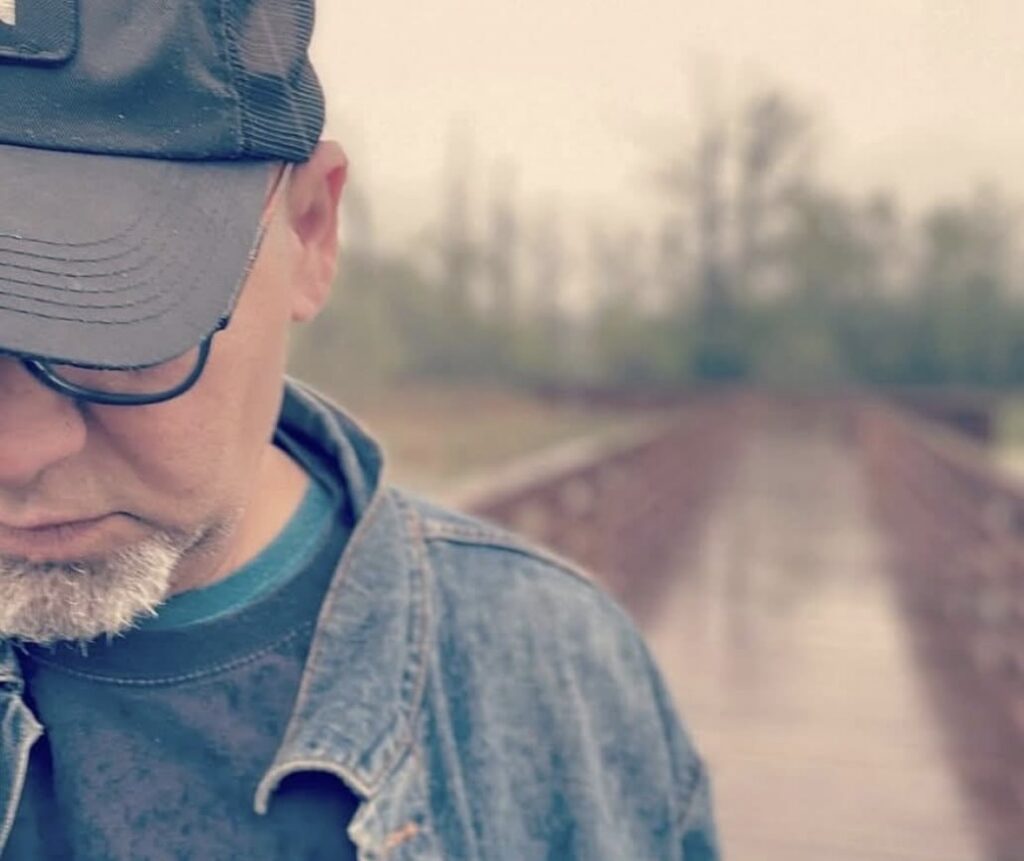
One can pause before leaving, just stand for a bit here and there. See and hear the bees buzzing around. Just see and be. Look at the thousands of wild clover and daisies. Maybe view some Blackhawks or a red-tailed hawk not too far away. Spring is cold and damp, but okay. Summer aglow with colour and blooms. Autumn sometimes my favourite for its windy cool soulfulness and leaves and earth tones…and not too cold or too hot. Winter shines with snow and has its own charm. It’s a good area for a poet and nature walker or landscape photographer to travel through. Certainly not lacking in inspiration and a brief respite from the busy cacophony of the outside fast-paced world.
About the author
Brian Michael Barbeito is a Canadian poet and photographer residing in the Southern Ontario area.
Write for UFI
Have a story about cities? We publish articles and photo essays from researchers, practitioners and photographers.
Pitch us at contact@urbanfrontierinsights.com