
Introduction: An Industrialist Ahead of His Time
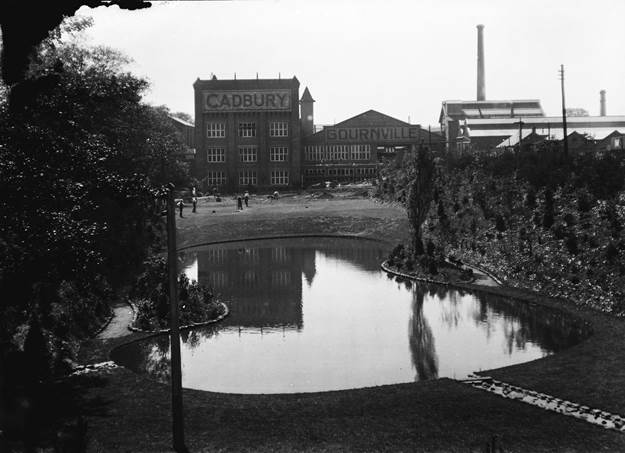
In 1893, George Cadbury relocated his chocolate factory from central Birmingham to a semi-rural site that would become Bournville. His vision was radical for its time: a “factory in a garden” — where industrial production coexisted with green space, decent housing, recreation grounds and social amenities.
Cadbury’s experiment was not merely philanthropic. It was spatially strategic. Influenced by Quaker ethics and later aligned with Ebenezer Howard’s Garden City philosophy, Bournville sought to reconcile industrial efficiency with human wellbeing (Howard, 1898; Hall, 1996).
More than a century later, as cities confront climate stress, mental health crises and workplace burnout, Cadbury’s garden ethos appears strikingly contemporary.
The Garden as Preventive Urbanism
The Garden City idea was grounded in the belief that access to light, air and greenery was not ornamental but essential. Howard (1898) argued that industrial cities required spatial restructuring to avoid overcrowding, disease and social alienation. Cadbury operationalized this ethos through low-density housing, tree-lined streets, allotments and recreational facilities.
Modern research affirms the health logic behind this approach. Ulrich (1984) demonstrated that exposure to natural views accelerates physiological recovery from stress. Kaplan and Kaplan (1989) identified restorative qualities in green environments that enhance cognitive functioning. More recently, Twohig-Bennett and Jones (2018), in a large systematic review, found significant associations between green space exposure and reduced risk of type II diabetes, cardiovascular disease and premature mortality.
Cadbury’s “factory in a garden” anticipated what contemporary urban health scholars now describe as nature-based preventive infrastructure.
Industrial Work and Environmental Stress
Industrialization historically concentrated workers in polluted, overcrowded districts. Environmental psychology research shows that chronic exposure to noise, density and poor housing conditions correlates with stress and diminished mental health (Evans, 2003).
Cadbury’s relocation strategy reduced exposure to such stressors. Housing near green landscapes, provision of recreation spaces, and spatial separation from congested urban cores functioned as environmental buffers.
In today’s context, this resonates with research on workplace wellbeing. Studies increasingly demonstrate that proximity to green environments enhances productivity, reduces absenteeism and improves mood (Bratman et al., 2015). The garden was not simply a moral symbol; it was an economic strategy for healthier labour systems.
Climate and Spatial Resilience
Beyond health, Cadbury’s model has relevance in the era of climate change. Urban heat island effects disproportionately affect dense industrial zones. Vegetation mitigates heat stress, improves air quality and enhances stormwater absorption. The integration of green infrastructure into industrial landscapes aligns with contemporary climate adaptation strategies (Gill et al., 2007).
Thus, the “factory in a garden” prefigures sustainable industrial urbanism — integrating ecological systems within economic production.
Social Cohesion and Community Design
Bournville also emphasized community facilities — schools, sports grounds, civic halls — recognizing that spatial design influences social relations. Leyden (2003) demonstrates that walkable, mixed-use neighbourhoods correlate with higher levels of social capital.
Cadbury’s design fostered informal interaction through pedestrian-friendly layouts and communal spaces. In today’s context of rising urban loneliness, such spatial configurations are critical. Research consistently links neighbourhood design to social cohesion and mental wellbeing.
The garden ethos, therefore, was not only ecological — it was social architecture.
Relevance in the Twenty-First Century
Today, industrial estates and economic zones are frequently designed as isolated, infrastructure-heavy landscapes. Worker housing, if provided, is often standardized and detached from ecological systems. Urban expansion prioritizes land efficiency over environmental integration.
Yet evidence suggests that integrating green infrastructure into industrial and residential planning improves health outcomes, climate resilience and productivity (Twohig-Bennett & Jones, 2018; Bratman et al., 2015).
Cadbury’s model invites planners to reconsider the spatial relationship between production, housing and nature. Rather than separating economic and ecological functions, the garden ethos integrates them.
Conclusion: Rediscovering the Garden
The “factory in a garden” was neither naïve nor nostalgic. It was an early recognition that industrial growth must be mediated through environmental quality.
Cadbury understood what contemporary research now confirms:
- Built environments influence stress and health (Evans, 2003).
- Green exposure improves recovery and wellbeing (Ulrich, 1984).
- Neighbourhood design shapes social cohesion (Leyden, 2003).
In an era marked by climate vulnerability, mental health crises and workplace burnout, the garden ethos is not antiquated — it is urgent.
Reclaiming Cadbury’s vision does not mean replicating Bournville wholesale. It means embedding ecological thinking within economic planning, designing workplaces within landscapes, and recognizing that productivity and wellbeing are spatially intertwined.
The garden was never decorative.
It was — and remains — infrastructure for healthy urban living.
References
Bratman, G. N., Hamilton, J. P., & Daily, G. C. (2015). The impacts of nature experience on human cognitive function and mental health. Annals of the New York Academy of Sciences, 1249(1), 118–136.
Evans, G. W. (2003). The built environment and mental health. Journal of Urban Health, 80(4), 536–555.
Gill, S. E., Handley, J. F., Ennos, A. R., & Pauleit, S. (2007). Adapting cities for climate change: The role of green infrastructure. Built Environment, 33(1), 115–133.
Hall, P. (1996). Cities of Tomorrow. Blackwell.
Howard, E. (1898). Garden Cities of To-morrow.
Kaplan, R., & Kaplan, S. (1989). The Experience of Nature. Cambridge University Press.
Leyden, K. M. (2003). Social capital and the built environment. American Journal of Public Health, 93(9), 1546–1551.
Twohig-Bennett, C., & Jones, A. (2018). The health benefits of the great outdoors: A systematic review and meta-analysis of greenspace exposure. Environmental Research, 166, 628–637.
Ulrich, R. S. (1984). View through a window may influence recovery from surgery. Science, 224(4647), 420–421.